Mobile phones run our lives. We use them for communication, banking, education, and business. As smartphone technology gets more advanced, repairing these devices requires deeper technical knowledge. Replacing a display or battery is no longer enough for technicians who want to handle complex motherboard faults.
A Chip Level Mobile Service Course Madurai is designed for learners who want to understand mobile phones beyond basic part replacement. It focuses on diagnosing circuit-level faults, working with electronic components, using professional repair tools, and developing systematic troubleshooting skills.
If you are a beginner, student, working technician, or someone planning to start a mobile repair business, this guide will help you understand what chip-level training involves, what skills you learn, which tools matter, and how to pick the right program.
What Is a Chip Level Mobile Service Course?
A chip-level mobile service course teaches advanced smartphone hardware diagnosis and motherboard-level repair techniques. You learn how to identify faults directly at the component and circuit level.
Take a completely dead smartphone as an example. A basic technician might try changing the battery or charging port. A chip-level technician takes the diagnosis further by checking:
- Battery voltage and current consumption
- Charging and power supply sections
- Short circuits on the motherboard
- Damaged capacitors, resistors, and coils
- Power management circuits
- Charging-related components
- Broken PCB tracks or connections
The objective is to identify the actual cause of a fault before attempting a repair. Good training teaches you this strict diagnostic mindset. It is one of the most valuable skills you pick up in an advanced Chip Level Mobile Service Course Madurai.
Why Choose a Chip Level Mobile Service Course Madurai?
Choosing a training course locally makes practical learning physically accessible. For learners in and around Madurai, attending regular hands-on sessions beats depending entirely on online videos.
Mobile repair is an entirely physical skill. Watching a video helps you understand a concept. But professional repair work also demands hand control, tool familiarity, and repeated practice on real motherboards.
A solid Chip Level Mobile Service Course Madurai helps you build skills like:
- Smartphone disassembly and assembly
- Electronic component identification
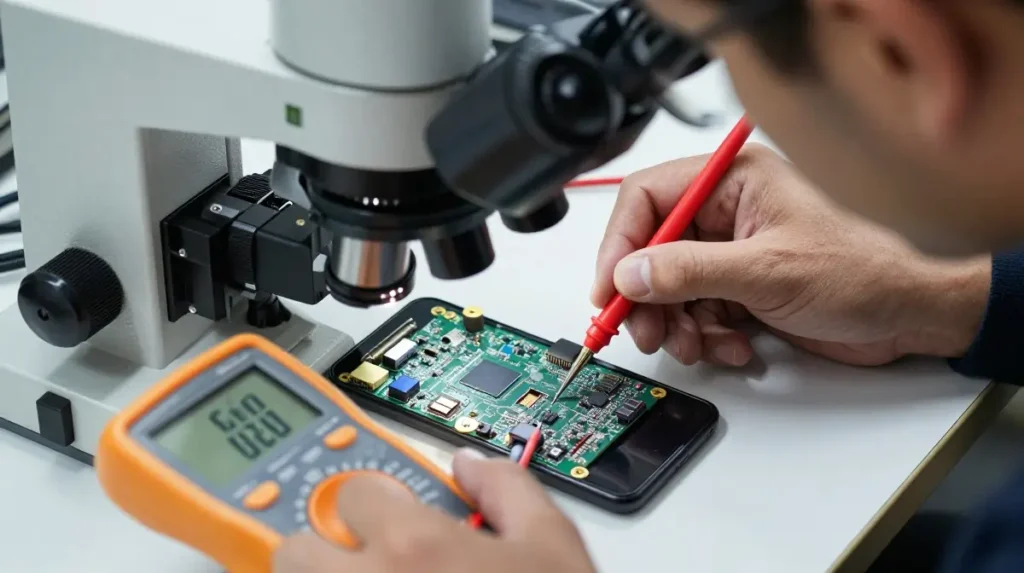
- Multimeter testing
- DC power supply diagnosis
- Soldering and desoldering
- Hot-air rework techniques
- PCB inspection
- Short-circuit diagnosis
- Charging fault troubleshooting
- No-power fault diagnosis
- Water-damage inspection
- Jumper and track repair
- Safe handling of sensitive components
Classroom-based practical training gives you the chance to grab an instructor and ask questions immediately. You get to find out exactly why a specific diagnostic method works on a dead phone.
Who Can Join?
Admission requirements vary, but this type of Chip Level Mobile Service Course Madurai generally fits:
- School or college students interested in technical skills
- Beginners with no previous mobile repair experience
- Basic mobile service technicians
- Electronics enthusiasts
- People planning to open a mobile repair shop
- Shop owners who want to add repair services
- Technicians who want to improve motherboard-level skills
A technical background helps, but it is not mandatory. A beginner-friendly program starts with fundamental electronics before moving into complex repair procedures.
What Will You Learn in an Advanced Mobile Phone Repairing Course in Madurai?
The exact syllabus varies between training institutes. Always ask for a written course breakdown and practical-training details before you enroll. A comprehensive Advanced Mobile Phone Repairing Course in Madurai progresses naturally from basic concepts straight into heavy diagnosis.
1. Mobile Phone Hardware Fundamentals
Before you can fix a motherboard, you need to understand how a smartphone is built. You usually start by learning about:
- Display assemblies
- Batteries
- Charging ports
- Speakers and microphones
- Cameras
- Buttons and flex cables
- Antenna connections
- Sensors
- Mainboards and sub-boards
Learning this basic architecture makes advanced troubleshooting much easier later on.
2. Basic Electronics for Mobile Repair
Chip-level servicing requires a solid grip on electronic components and measurements. Expect to study:
- Voltage and current
- Resistance and continuity
- Diodes and resistors
- Capacitors
- Coils and inductors
- Transistors
- Integrated circuits (ICs)
You do not need to become an electrical engineer. You just need to understand enough basic electronics to test components safely and interpret multimeter readings.
3. Professional Repair Tool Usage
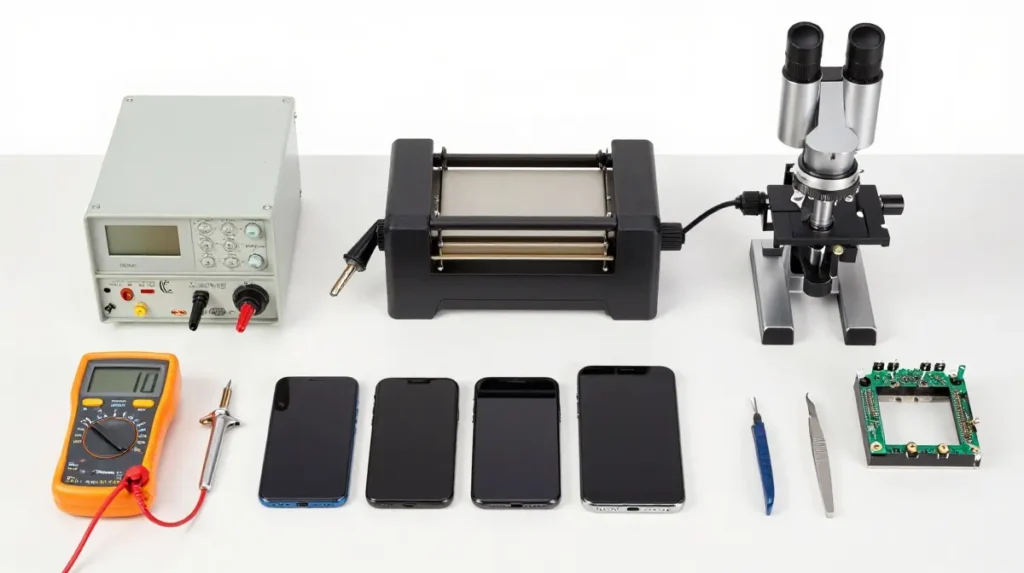
Your skill as a technician depends heavily on tool mastery. Common tools used in a Chip Level Mobile Service Course Madurai include:
| Tool | Common Purpose |
| Digital multimeter | Voltage, resistance and continuity testing |
| DC power supply | Power diagnosis and current observation |
| Soldering station | Soldering components and connections |
| Hot-air rework station | Controlled heating and component removal |
| Microscope | Inspecting small components and solder joints |
| PCB holder | Holding the motherboard securely |
| Tweezers | Handling small electronic components |
| Flux | Supporting controlled soldering and rework |
You have to use professional tools with strict safety procedures. Excessive heat, incorrect voltage, or careless handling will instantly fry a motherboard.
Chip-Level Diagnosis and Motherboard Repair Skills
A good Chip Level Mobile Service Course Madurai drills a logical diagnostic process into your head. You learn to trace faults systematically.
No-Power Fault Diagnosis
When a phone goes completely dead, several different faults might cause the issue. You usually have to inspect:
- The physical condition of the device
- Battery condition and charging response
- Current behaviour using diagnostic equipment
- Signs of short circuits
- Relevant power sections
- Damaged or missing motherboard components
Your actual repair strategy depends completely on the device model and your diagnostic readings.
Charging Problems
A dead charging port, a snapped flex cable, or a bad battery can all stop a phone from charging. A trained technician systematically diagnoses the actual problem using proper testing gear.
Short-Circuit Detection
Short circuits happen constantly, and they are notoriously tough to track down. Proper training covers safe testing procedures to help you isolate the exact affected circuit. Careless probing permanently damages motherboards, so supervised practice is absolutely necessary for beginners.
Water-Damaged Phones
A thorough Chip Level Mobile Service Course Madurai teaches you that liquid damage triggers fast corrosion across the entire board. A professional inspection usually involves:
- Checking for visible corrosion
- Inspecting connectors and components
- Identifying damaged areas
- Testing affected circuits
- Determining if the repair is practical
Knowing exactly when to keep a wet device powered off is a massive professional skill. You can review standard liquid damage guidelines to understand the urgency of this process.
Jumper and PCB Track Repair
You sometimes have to rebuild broken connections and damaged PCB tracks. Students grind through these techniques on scrap boards before touching a customer’s actual phone. Adhering to professional electronics soldering standards ensures these microscopic repairs last.
Basic Mobile Repair vs Chip-Level Mobile Repair
Understanding this difference helps you pick the right Chip Level Mobile Service Course Madurai.
| Basic Mobile Repair | Chip-Level Mobile Repair |
| Screen replacement | Motherboard fault diagnosis |
| Battery replacement | Circuit-level testing |
| Charging-port replacement | Short-circuit diagnosis |
| Speaker or microphone replacement | Component-level troubleshooting |
| Basic disassembly | Advanced PCB inspection |
| Module replacement | Precision soldering and rework |
Both levels pay the bills. Beginners usually benefit from learning the basic swaps first before diving into chip-level work. If you already know how to swap screens and batteries, an advanced course expands your diagnostic reach.
Practical Training Matters More Than Watching Demonstrations
You have to ask one massive question before joining a Chip Level Mobile Service Course Madurai: How much hands-on practice will I actually get?
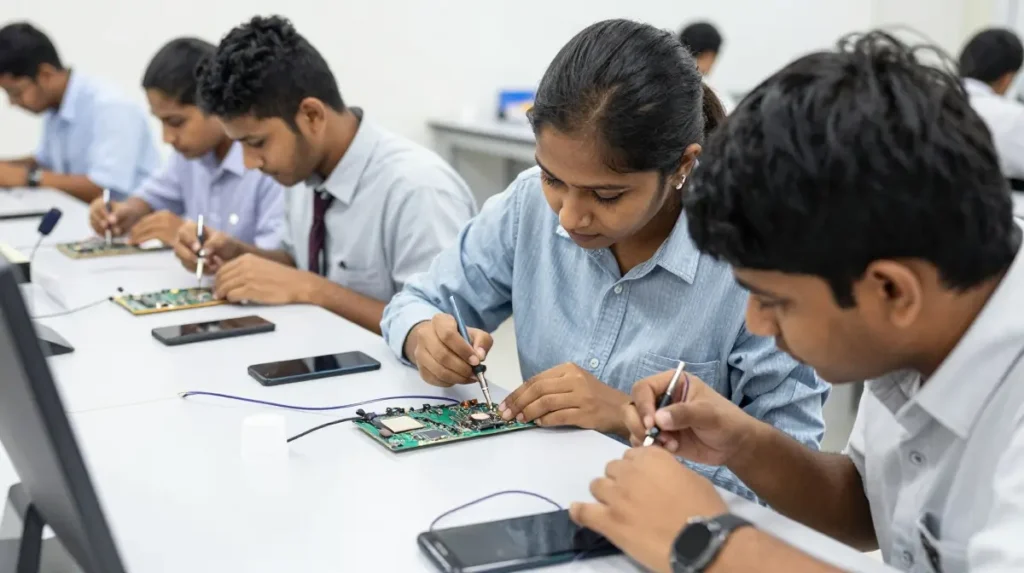
Watching an instructor solder an IC chip is totally different from doing it yourself. Real practical training lets you:
- Handle mobile repair tools for beginners and experts
- Practise soldering on suitable boards
- Identify components and take measurements
- Inspect different fault conditions
- Follow a diagnostic process
- Understand unsuccessful repair attempts
- Learn safe working habits
A Practical Example
Think about a smartphone with a charging issue. A solid training program teaches you to investigate:
- What exactly is the customer’s complaint?
- Is the charger and cable working?
- Is the charging connector physically damaged?
- Is there visible corrosion?
- What measurements are relevant?
- Which section should be checked next?
- What evidence supports the repair decision?
This method builds truly independent technicians.
How to Choose the Best Chip Level Mobile Service Course in Madurai
You have to evaluate the actual learning environment. Look past the flashy ads and promises of instant expertise.
Check the Course Syllabus
Verify that the syllabus hits both the fundamentals and advanced topics. Jumping straight into hot-air rework without understanding basic voltage will completely confuse a beginner.
Ask About Hands-On Practice
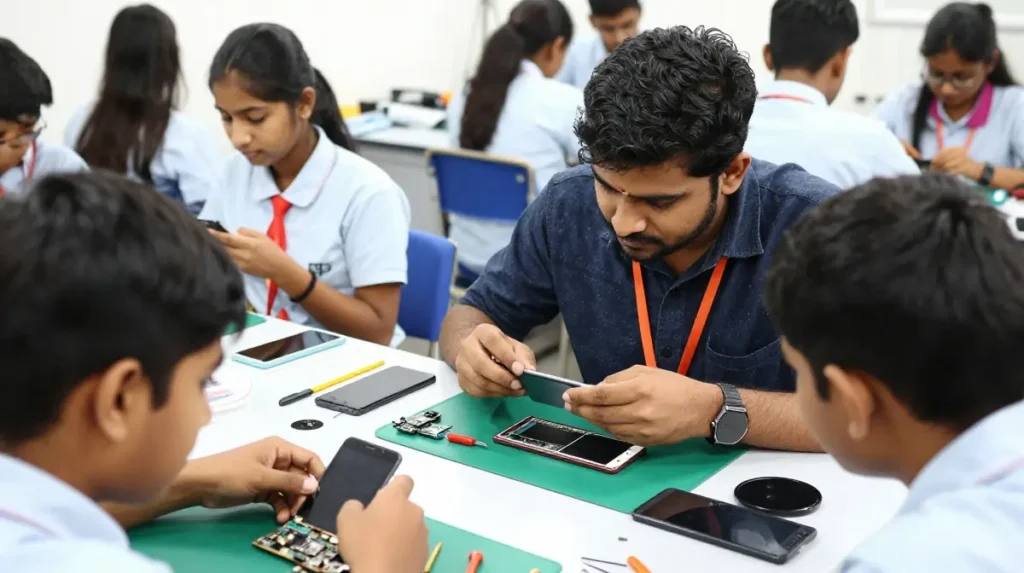
Find out if you actually get to hold the tools yourself. Ask the institute:
- How many practical sessions are included?
- Are practice boards available?
- Can students perform supervised repairs?
- What tools are available during training?
- Is troubleshooting taught or only demonstrated?
Check the Trainer’s Practical Experience
A veteran trainer explains exactly why a specific test is necessary. Real-world bench experience matters because broken phones rarely follow the textbook.
Look at the Lab Environment
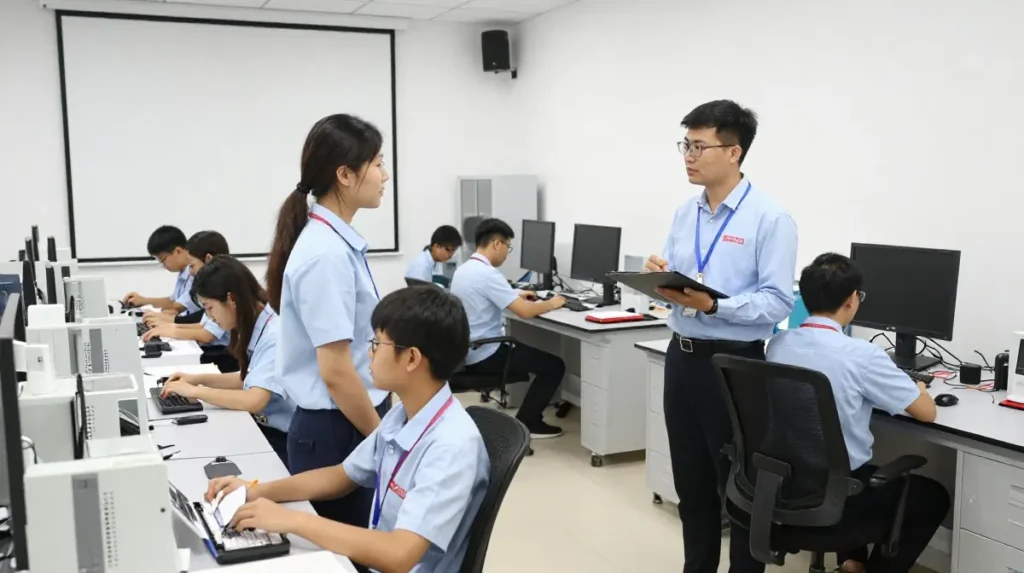
A proper lab setup usually includes:
- Proper workbenches and adequate lighting
- Magnification equipment
- Diagnostic instruments
- Soldering and rework equipment
- Practice boards
- Safe tool-handling procedures
Understand the Course Duration
Micro-soldering takes time to learn. Do not pick a program just because it promises to finish fast. Short courses give you a decent introduction, but you will need to keep practicing afterward to build reliable speed.
Ask About Post-Course Support
Post-training support is a lifesaver when you finally start taking on real customer devices. Institutes often provide:
- Technical doubt clarification
- Practice guidance
- Career guidance
- Business setup information
- Updates on newer repair techniques
Confirm exactly what support they offer before you enroll.
Common Mistakes Beginners Should Avoid
You have to experiment to learn this trade, but some mistakes will permanently kill a motherboard.
1. Replacing Parts Without Diagnosis
Tossing new IC chips at a board wastes time and cash. You have to follow a strict diagnostic process and rely on your multimeter readings.
2. Applying Excessive Heat
Blasting a board with a hot-air gun melts nearby connectors and lifts PCB pads. You need to practice controlled heat techniques on scrap boards first.
3. Using Low-Quality Tools
Cheap tweezers and weak soldering irons make precision work impossible. Learn with reliable equipment and figure out exactly which tools you need before you blow your budget.
4. Practising First on Customer Phones
You cannot learn a new reballing technique on a paying customer’s phone. Build your hand skills on dead donor boards under a microscope first.
5. Ignoring Data Privacy
You constantly handle phones packed with banking apps and private photos. Lock down your privacy practices and stay entirely out of personal data.
6. Promising Every Phone Can Be Repaired
Some motherboards are completely cooked. Be honest with the customer about the risks and the costs upfront. Following honest consumer repair guidelines builds a massive amount of trust in a local repair business.
Career Opportunities After Mobile Service Training
Finishing a Chip Level Mobile Service Course Madurai unlocks several solid career paths. You might consider:
- Working as a mobile repair technician
- Joining a multi-brand repair shop
- Working in an independent service centre
- Starting a small mobile repair business
- Offering repair services alongside a mobile accessories shop
Phone manufacturers change their board layouts constantly. Successful technicians stay on the bench and keep learning long after their initial training ends.
Can You Start Your Own Mobile Service Centre?
Yes. But technical skill is just the baseline for running a profitable shop. You also have to handle:
- Customer communication and repair documentation
- Spare-parts sourcing and pricing
- Warranty policies and data privacy
- Inventory management
- Local business registration and tax requirements
Actionable Tips for Students Before Joining
Look closely at your options before you hand over your money for mobile service training for beginners or an advanced Chip Level Mobile Service Course Madurai.
- Ask for a complete syllabus.
- Visit the training lab if possible.
- Ask how much individual practical work is provided.
- Understand whether the course starts from basics.
- Check what tools students can use during training.
- Clarify course fees and any additional costs.
- Ask whether study materials are included.
- Confirm the type of certificate provided.
- Understand what post-course support is actually available.
- Avoid choosing a course based only on unrealistic income promises.
Find a training center that fits your exact budget and current skill level.
Frequently Asked Questions
What is a Chip Level Mobile Service Course Madurai?
A Chip Level Mobile Service Course Madurai teaches advanced smartphone repair skills. You learn electronic component identification, motherboard diagnosis, soldering, short-circuit testing, and systematic troubleshooting.
Can a beginner join a chip-level mobile repair course?
Yes. You just need a course that starts with basic electronics before throwing you into complex motherboard work. Beginners should build a strong foundation first.
What is the difference between basic and chip-level mobile repair?
Basic repair focuses on replacing parts like screens and batteries. Chip-level repair focuses on motherboard diagnosis, circuit faults, and precision micro-soldering.
What tools are commonly used in advanced mobile repair training?
You rely heavily on a digital multimeter, DC power supply, soldering station, hot-air rework station, microscope, PCB holder, and tweezers.
How do I choose an Advanced Mobile Phone Repairing Course in Madurai?
Compare the syllabus, trainer experience, and practical lab facilities. You want a program that forces you to do the actual diagnostic work yourself rather than just watching repair demonstrations.
Conclusion
A Chip Level Mobile Service Course Madurai is a powerful path for anyone wanting to move beyond basic smartphone part replacement. You learn to inspect a device, understand electronic components, use professional tools safely, and follow a logical troubleshooting process.
Before joining any Best Mobile Service Course in Madurai, compare the syllabus, practical facilities, and trainer experience. You just need a program that helps you build genuine technical ability on the bench.