Blog

Your blog category

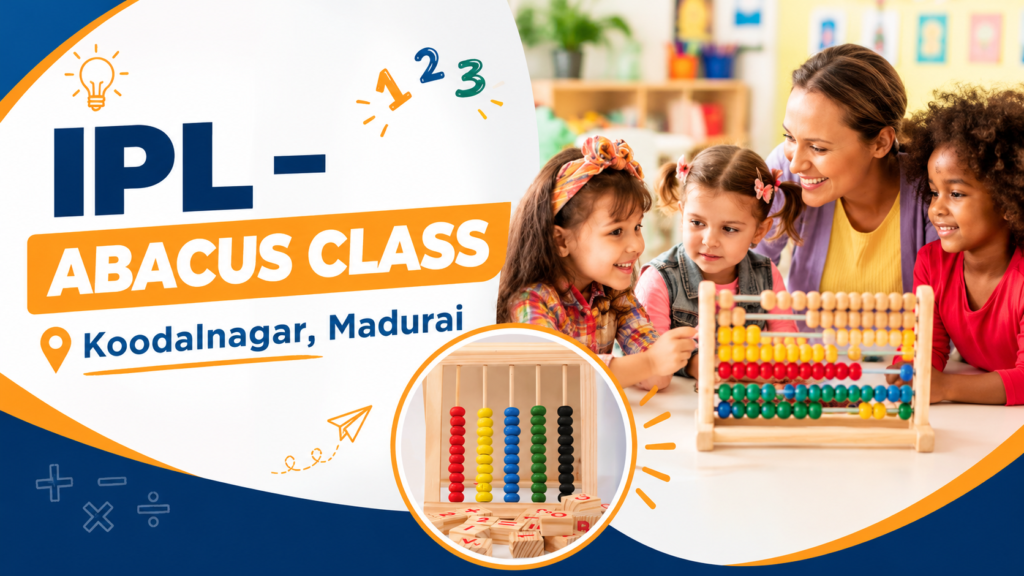
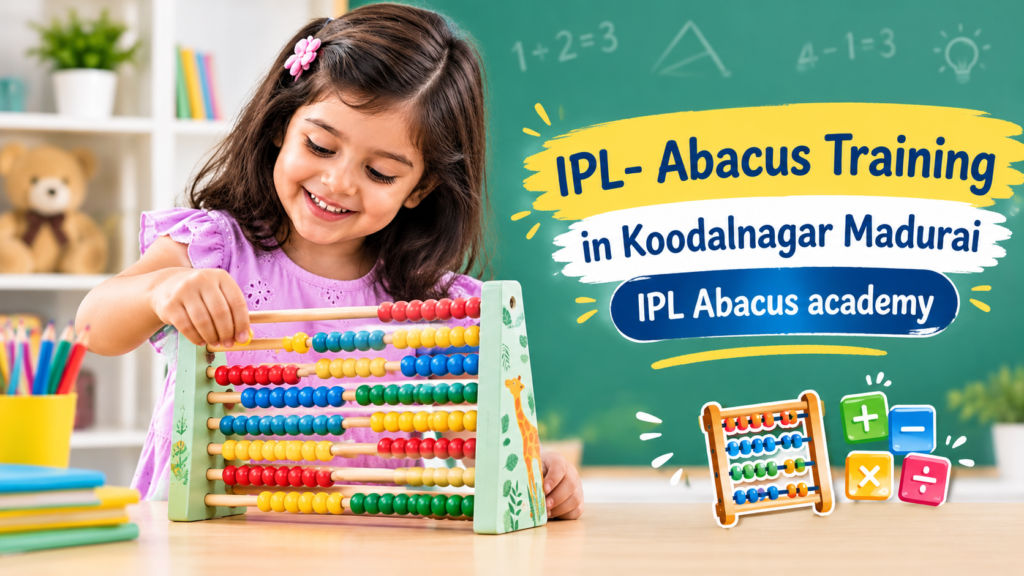
IPL Abacus Training in Koodalnagar Madurai
Blog

IPL Abacus Training in Koodalnagar Madurai

1. What is an abacus course, and how does it work? An abacus course introduces children to numbers and arithmetic using a physical counting frame. The teacher shows how beads represent quantities and guides students through simple sums before moving to bigger challenges. At first, kids work directly with the frame. They learn bead positions, finger movements, and how each shift changes a number. A child might start by showing 5, then 8, and then 12. Once those numbers stick, the teacher introduces simple addition and subtraction. What do children learn in beginner abacus classes? A beginner course covers essential arithmetic fundamentals: Syllabi vary by center. Ask for a course outline before enrolling your child. How does a typical lesson work? Classes usually start with a quick review of the previous topic. The teacher demonstrates a new technique, shows the bead moves, and lets students try it out. For example, kids might start with single-digit addition. Once they get the hang of it, they work through worksheets on their own. Good instructors check for real understanding instead of asking kids to memorize movements blindly. Quick answer: An abacus course teaches children to represent numbers using beads and solve arithmetic problems. Beginner classes start with number recognition and move into simple addition and subtraction. 2. Why should parents consider abacus classes for beginners? Kids learn maths at different speeds. Some grab abstract ideas fast, while others need physical tools to make sense of numbers. An abacus gives them a tactile way to calculate, making early maths far more approachable. When evaluating IPL Abacus Training in Koodalnagar Madurai, look at the core skills your child will build and how the program tracks growth. Better understanding of numbers Young kids often memorize answers without knowing why they work. An abacus makes abstract numbers concrete through physical movement. Research published by the National Center for Biotechnology Information shows that visual and spatial tools like the abacus help children build stronger mental representations of numerical values. Explore the overall benefits of abacus learning for children to understand how tactile methods influence cognition. When a child adds 4 + 3, they physically shift four beads and then three more. Counting the total connects the physical action directly to the written sum. That hands-on connection makes addition clear. As kids grow comfortable, they apply the same logic to bigger problems. More opportunities to practise concentration Abacus drills force kids to listen, follow steps, and move specific beads accurately. It gives them regular practice focusing on one task at a time. You can support this habit at home by setting up a quiet study spot and keeping practice times short. Attention spans grow through many daily activities, but structured exercises provide a solid starting point. Regular calculation practice Repetition helps kids get comfortable with arithmetic. Teachers introduce small exercise sets, verify answers, and dial up the difficulty over time. Beginners usually start with simple addition before touching subtraction. Once kids master those, teachers move them to harder exercises according to the syllabus. The goal is steady progress. Kids need enough time to digest one step before jumping to the next. Confidence through small achievements Maths anxiety is real for young kids. Starting with simple, manageable sums gives them room to learn without unnecessary stress. Praise effort, careful work, and progress rather than perfect scores. When your child makes a mistake, walk through the step again and let them retry. Avoid comparing your child’s speed with other students. Everyone moves at their own pace. A practical introduction to structured learning Abacus classes help kids get used to classroom routines, guided tasks, and practice schedules. These habits support general school performance. Just remember that abacus training complements school maths. It does not replace school lessons, homework, or basic logic. Educational guidelines published by UNICEF Education stress that foundational learning thrives best when supplementary activities reinforce standard classroom studies rather than replacing them. What parents should remember: Abacus learning gives kids structured arithmetic practice and hands-on number work. Real results depend on good teaching, active student participation, and steady home practice. 3. How to choose the right IPL abacus course for beginners Picking a center takes more than reading a brochure. You need to know how lessons run, what kids learn, and how progress gets tracked. If you are looking at IPL Abacus Training in Koodalnagar Madurai, keep these points in mind when you call or visit. Check the beginner syllabus Ask what children learn in their first month. A clear outline shows if the level matches your child’s current skills. Make sure the beginner level covers: Ask how teachers decide a child is ready to move up. Students need solid footing before tackling harder sums. Understand the teaching method Kids do best with clear demonstrations, real examples, and time to practice on their own. Ask how teachers handle kids who need extra help. A good program gives children space to ask questions and fix mistakes without feeling rushed. If the center offers a trial class, take it. Watch how the teacher interacts with the kids and explains new ideas. Ask about class size and individual attention Not every child gets a new calculation on the first try. Small class sizes mean teachers can spot mistakes and correct posture or finger technique quickly. Ask these questions before signing up: The answers will tell you if the classroom environment fits your child. Confirm the schedule and course fees Classes must fit into your child’s routine without ruining their schedule. School, homework, play, and rest all come first. Before enrolling at IPL Technologies, confirm these details directly with the center: What to check Questions to ask Course fees What is the total cost, and are there extra charges for exams or books? Class schedule Which days and time slots are open? Course duration How many months or hours does each level take? Learning materials Are the abacus frame and workbooks included in the fee? Assessments How often do teachers evaluate progress? Certificates


IPL Abacus Classes in Koodalnagar, Madurai
Blog

IPL Abacus Classes in Koodalnagar, Madurai

1. What is an abacus course, and how does it work? An abacus course introduces children to numbers and arithmetic using a physical counting frame. The teacher shows how beads translate to numbers and guides students through simple sums before moving on to bigger challenges. At first, kids work directly with the frame. They learn bead positions, finger movements, and how each shift changes a number. A child might start by showing 5, then 8, and then 12. Once those stick, the teacher introduces simple addition and subtraction. What do children learn in beginner abacus classes? A beginner course covers essential arithmetic fundamentals: Syllabi vary by center. Ask for a course outline before enrolling your child. How does a typical lesson work? Classes usually start with a quick review. The teacher demonstrates a new technique, shows the bead moves, and lets students try it out. For example, kids might start with single-digit addition. Once they get the hang of it, they work through worksheets on their own. Good instructors check for real understanding instead of forcing kids to memorize movements blindly. Quick answer: An abacus course teaches children to represent numbers using beads and solve arithmetic problems. Beginner classes start with number recognition and move into simple addition and subtraction. 2. Why should parents consider abacus classes for beginners? Kids learn maths at different speeds. Some grab abstract ideas fast, while others need physical tools to make sense of numbers. An abacus gives them a tactile way to calculate, making early maths far more approachable. When evaluating IPL Abacus Classes Koodalnagar Madurai, look at the core skills your child will build and how the program tracks growth. Better understanding of numbers Young kids often memorize answers without knowing why they work. An abacus makes abstract numbers concrete. Research published on NCBI shows that visual and spatial tools like the abacus help children build stronger mental representations of numerical values. When a child adds 4 + 3, they physically shift four beads and then three more. Counting the total connects the physical action directly to the written sum. That hands-on connection makes addition clear. As kids grow comfortable, they apply the same logic to bigger problems. More opportunities to practise concentration Abacus drills force kids to listen, follow steps, and move specific beads accurately. It gives them regular practice focusing on one task at a time. You can support this habit at home by setting up a quiet study spot and keeping practice times short. Attention spans grow through many daily activities, but structured exercises provide a great starting point. Regular calculation practice Repetition helps kids get comfortable with arithmetic. Teachers introduce small exercise sets, verify answers, and dial up the difficulty over time. Beginners usually start with simple addition before touching subtraction. Once kids master those, teachers move them to harder exercises according to the syllabus. The goal is steady progress. Kids need enough time to digest one step before jumping to the next. Confidence through small achievements Maths anxiety is real for young kids. Starting with small, manageable sums gives them room to learn without unnecessary stress. Praise effort, careful work, and progress rather than perfect scores. When your child makes a mistake, walk through the step again and let them retry. Avoid comparing your child’s speed with other students. Everyone moves at their own pace. A practical introduction to structured learning Abacus classes help kids get used to classroom routines, guided tasks, and practice schedules. These habits support general school performance. Just remember that abacus training complements school maths. It does not replace school lessons, homework, or basic logic. Educational guidelines from organizations like UNICEF Education stress that foundational learning thrives best when supplementary activities reinforce standard classroom studies rather than replacing them. What parents should remember: Abacus learning gives kids structured arithmetic practice and hands-on number work. Real results depend on good teaching, active student participation, and steady home practice. 3. How to choose the right IPL abacus course for beginners Picking a center takes more than reading a brochure. You need to know how lessons run, what kids learn, and how progress gets tracked. If you are looking at Koodalnagar – IPL Abacus Classes Koodalnagar Madurai – IPL Technologies, keep these points in mind when you call or visit. Check the beginner syllabus Ask what children learn in their first month. A clear outline shows if the level matches your child’s current skills. Make sure the beginner level covers: Ask how teachers decide a child is ready to move up. Students need solid footing before tackling harder sums. Understand the teaching method Kids do best with clear demonstrations, real examples, and time to practice on their own. Ask how teachers handle kids who need extra help. A good program gives children space to ask questions and fix mistakes without feeling rushed. If the center offers a trial class, take it. Watch how the teacher interacts with the kids and explains new ideas. Ask about class size and individual attention Not every child gets a new calculation on the first try. Small class sizes mean teachers can spot mistakes and correct posture or finger technique quickly. Ask these questions before signing up: The answers will tell you if the classroom environment fits your child. Confirm the schedule and course fees Classes must fit into your child’s routine without ruining their schedule. School, homework, play, and rest all come first. Before enrolling at IPL Technologies, confirm these details directly with the center: What to check Questions to ask Course fees What is the total cost, and are there extra charges for exams or books? Class schedule Which days and time slots are open? Course duration How many months or hours does each level take? Learning materials Are the abacus frame and workbooks included in the fee? Assessments How often do teachers evaluate progress? Certificates Is a completion certificate provided, and what are the rules to get it? Trial class Can my child attend a demo session first?

IPL – Abacus Course Koodalnagar Madurai
Blog

IPL – Abacus Course Koodalnagar Madurai

Many parents in Madurai look for ways to help their children build strong foundational maths skills, improve focus, and gain confidence in early schooling. As mental arithmetic and visual learning methods gain popularity, structured brain-development programs have become a preferred choice for young learners. If you are exploring local learning options, enrolling your child in the IPL – Abacus Course Koodalnagar Madurai offers a practical way to develop mental calculation skills, concentration, and problem-solving abilities in a structured, step-by-step manner. 1. What Is an Abacus Course and How Does It Help Children? An abacus is a traditional calculating tool made of a frame with vertical rods and movable beads. While modern digital devices calculate answers automatically, an abacus encourages children to perform calculations manually by visualising bead movements. Over time, students transition from using a physical abacus to visualizing the tool in their minds—a technique known as mental arithmetic. Research indexed on NCBI highlights that spatial-numerical learning tools like the abacus engage both brain hemispheres, improving visual memory, focus, and overall cognitive development. Why Is Hands-On Learning Useful? 2. What to Expect from an IPL Abacus Course for Beginners For young learners, starting a new skill should feel encouraging rather than overwhelming. The IPL abacus course for the beginners introduces fundamental concepts gradually, ensuring students master bead mechanics before moving on to complex calculations. How Are Beginner Lessons Usually Structured? Structured beginner programs follow evidence-based early childhood pedagogy, similar to learning frameworks recognized by educational institutions like Unicef Education. 3. Key Benefits of Learning Abacus in Koodalnagar, Madurai Choosing a local learning center in Koodalnagar provides convenience for families while delivering proven academic benefits. 4. How to Choose the Right Abacus Course for Your Child With multiple educational options available, finding the right fit for your child requires careful evaluation. Here are key factors to consider when selecting an IPL – Abacus Course Koodalnagar Madurai:                      ┌────────────────────────────────────────┐                      │     Choosing the Right Abacus Course   │                      └───────────────────┬────────────────────┘                                          │          ┌───────────────────────────────┼───────────────────────────────┐          ▼                               ▼                               ▼ ┌─────────────────┐             ┌─────────────────┐             ┌─────────────────┐ │ Course Structure│             │ Batch Size &    │             │ Instructor      │ │ & Progression   │             │ Environment     │             │ Expertise       │ └─────────────────┘             └─────────────────┘             └─────────────────┘ Understand the Course Structure Ensure the course offers a well-defined curriculum that progresses smoothly through foundational levels to advanced mental arithmetic. Check Class Size and Individual Attention Smaller batch sizes ensure that the instructor can monitor every child’s finger movements, posture, and calculation pace carefully. Verify Instructor Expertise Qualified trainers understand child psychology and use positive reinforcement to keep young learners motivated. 5. Helpful Tips for Parents to Support Learning at Home While classroom guidance is vital, consistent support at home accelerates a child’s progress. To explore search trends and parental interest in early skill development, you can consult insights on Google Trends. Conclusion Enrolling your child in the IPL – Abacus Course Koodalnagar Madurai is an excellent investment in their foundational cognitive abilities, concentration, and mathematical confidence. By providing structured beginner lessons and encouraging brief daily practice at home, you can give your child a strong mental math foundation that serves them throughout their academic journey. For more educational guides, feel free to explore our related resources on choosing local enrichment programs in Madurai. Additional SEO & Implementation Recommendations

IPL Abacus Classes Koodalnagar Madurai
Blog

IPL Abacus Classes Koodalnagar Madurai

Looking for Abacus Classes in Koodalnagar, Madurai? Does your child take a long time to solve simple maths problems? Do they understand numbers but struggle to calculate quickly or feel nervous when answering maths questions? Many parents look for practical ways to help their children become more comfortable with numbers. One learning method worth exploring is abacus training. It introduces children to numbers through a physical counting tool and gradually encourages them to perform calculations mentally. With regular practice, children can develop familiarity with number patterns, calculation techniques, and step-by-step problem-solving. For parents exploring IPL – Abacus Classes Koodalnagar Madurai, understanding how abacus education works, what children learn at different stages, and how to choose a suitable training programme can make the decision easier. In this guide, we will explain the basics of abacus learning, its potential benefits, how to evaluate an abacus training institute, and what parents should consider before enrolling their children. 1. What Is Abacus Training, and How Does It Help Children Learn Maths? An abacus is a counting tool made with beads arranged on rods or wires. Moving the beads represents numbers and mathematical operations. Children learn to use these movements to understand quantities and perform calculations. Unlike learning arithmetic only through written exercises, abacus training gives children a visual and hands-on way to explore numbers. Studies indexed in the National Center for Biotechnology Information (NCBI) demonstrate that visual and tactile learning tools actively support spatial reasoning and working memory in early childhood. How does abacus learning work? A structured abacus programme commonly introduces the following stages: The exact sequence and pace vary between training programmes. Children should have enough time to understand each stage before moving forward. Is abacus suitable for beginners? Yes. Many abacus programmes are designed for beginners, including children with little previous experience using an abacus. Parents should look for a programme that begins with foundational concepts, provides clear demonstrations, and allows children to practise at a comfortable pace. The objective is not simply to finish calculations quickly. It is to develop a reliable understanding of numbers and the methods used to calculate them. If your child is also starting to explore digital literacy, feel free to learn more about our foundational computer courses for beginners to support their broader skill development. 2. Benefits of Joining IPL Abacus Classes in Koodalnagar, Madurai Parents often explore abacus training because they want their children to approach mathematics with greater confidence. The benefits depend on the child’s interest, teaching quality, practice routine, and individual learning needs. When considering IPL – Abacus Classes Koodalnagar Madurai, these are some of the learning outcomes worth discussing with the trainer. A. Better familiarity with numbers Using beads helps children see how numbers can be represented and manipulated. For example, a child learning to calculate $23 + 15$ can represent 23 on the abacus, add 15, and observe the resulting value of 38. This concrete process can make numerical operations easier to understand, particularly for children who benefit from visual learning. B. Improved calculation fluency Regular practice may help children become more comfortable with addition, subtraction, and other operations covered by their course. Calculation fluency means solving familiar problems accurately and efficiently. Speed can develop over time, but accuracy and understanding should come first. C. Practice in sustained attention During an abacus exercise, children need to follow instructions, track bead positions, and complete calculations carefully. These activities provide opportunities to practise maintaining attention on a task. However, improvements in attention during abacus practice do not automatically mean that every aspect of concentration will improve in other situations. D. Greater confidence in mathematics Children may feel more confident when they understand how to solve a problem rather than simply memorising an answer. Small, achievable exercises can help them recognise their progress. Encouragement from parents and trainers can also make learning feel more enjoyable. E. A structured learning routine A regular abacus class and a short home-practice routine can help children build consistency. For example, a child might practise for 10–15 minutes at home on most days, provided the duration suits their age, attention span, and trainer’s recommendations. The goal is steady improvement without making practice feel like a punishment. These foundational routines help children succeed when following national educational frameworks such as the NCERT curriculum guidelines. 3. How to Choose the Best Abacus Training Institute in Koodalnagar, Madurai Searching for IPL – Best Abacus Training Institute Koodalnagar Madurai is a starting point, but parents should evaluate the actual learning experience before enrolling their children. A suitable institute should offer clear instruction, an appropriate curriculum, and a learning environment in which children feel comfortable asking questions. You can review our background and educational philosophy on the About IPL Technologies page. Check the course structure and levels Ask whether the programme is divided into beginner, intermediate, and advanced stages. A level-based curriculum can help parents understand what their child will learn and how progress will be assessed. Useful questions include: The answers should explain the learning process clearly rather than promising instant results. Understand the trainer’s teaching approach A good trainer should be able to explain calculations step by step and identify where a child is having difficulty. Ask whether students receive demonstrations, guided practice, individual feedback, and opportunities to correct mistakes. It is also worth finding out how the trainer supports children who learn at different speeds. Ask about class size and practice opportunities Class size can influence how much individual attention a child receives. Ask how the trainer monitors each student’s progress and whether children have enough time to practise during class. Parents should also understand whether home exercises are provided and how doubts can be clarified between sessions. Review the fee structure and schedule Before enrolling, confirm the total course fee and what it includes. What to check Why it matters Course duration Helps you plan around school and other activities Class timings Makes regular attendance easier Learning materials Clarifies whether an abacus and workbooks are included Assessment method

IPL – Abacus Class Koodalnagar Madurai
Blog

IPL – Abacus Class Koodalnagar Madurai

Introduction: Why Choose an Abacus Class for Your Child? You want your child to handle maths with confidence. But many kids freeze up over basic sums or panic during tests. Daily practice with proper guidance builds strong math skills and removes that fear. Abacus training teaches numbers using a physical counting tool. Kids move from sliding physical beads to visualizing calculations in their heads, boosting spatial reasoning and working memory (as highlighted in studies on child cognitive development). If you are looking into IPL – Abacus Class Koodalnagar Madurai, you need to look beyond flyers and promises. You want to check teacher quality, batch sizes, daily practice, and classroom environment. This guide breaks down how abacus learning works, what to look for before enrolling, and how to pick the right centre for your child. 1. What Is Abacus Training? An abacus uses beads on fixed rods. Each bead carries a specific value depending on its placement. Kids learn by physically sliding beads to solve sums. Later on, they imagine the frame and calculate mentally without physical tools. How Does an Abacus Class Work? Most courses follow 6 distinct steps: Learning speed depends on your child’s age, practice habits, and the institute’s pace. Is Abacus Suitable for Beginners? Yes. Beginners start with basic numbers and counting. Ask about minimum entry age, basic syllabus details, class duration, and placement rules before signing up. 2. Benefits of Joining an Abacus Class Abacus classes offer structured practice, but real progress takes time, guidance, and daily effort. Improves Calculation Practice Kids work through number patterns repeatedly, which builds speed and accuracy on basic arithmetic. For example, a child might struggle with $24 + 15$ initially. Structured practice gives them a step-by-step path to work out the answer. Practical tip: Tell your child to focus on understanding each step instead of rushing for quick answers. Supports Concentration Abacus tasks require full attention. Kids must listen carefully, read bead layouts, and calculate step by step. This routine trains attention spans over time. Keep in mind that attention improvements vary for every child. Encourages Memory and Visualisation Mental abacus work forces kids to picture bead layouts in their head. This exercises short-term memory and spatial thinking. Ask your child to explain how they solved a sum instead of giving them the answer right away. Builds Confidence in Mathematics Kids often hold back in class out of fear. A patient instructor and structured tasks make them comfortable trying. Confidence comes from understanding the steps, not from winning a speed race. Develops a Regular Learning Habit Short daily practice sets up solid study routines. Have your child practice for 10–15 minutes on assigned worksheets. Match the time to your child’s age and focus limit. Important: Abacus practice supports school math aligned with standard NCERT curriculum guidelines, but it does not replace core concepts, word problems, or textbook curricula. 3. IPL – Abacus Class Koodalnagar Madurai: What Should Parents Look For? Visit IPL – Abacus Class Koodalnagar Madurai in person before enrolling your child. A name alone does not tell you about teaching quality. Talk to the actual instructor and watch a class in action. Learn more about our background on the About IPL Technologies page. Check the Teaching Method Ask how teachers introduce new steps and handle kids who struggle. Good centers use clear demonstrations, guided practice, and direct feedback. Look for: Ask About Class Size and Individual Attention Kids learn at completely different speeds. Some grab concepts instantly while others need extra demos. Ask these questions first: Understand the Syllabus and Duration Abacus levels vary widely between institutes. Get a written breakdown of topics covered at each stage, along with assessment rules for moving up. Avoid fast-track promises—kids need actual time to practice each skill. Evaluate the Learning Atmosphere Kids learn best when they can ask questions without fear. Check if the classroom is clean and quiet, if the instructor stays patient, and if students receive individual feedback. If you are evaluating IPL – Best Abacus Institute Class Koodalnagar Madurai, these direct checks matter far more than promotional claims. You can explore our full range of programs on the IPL Technologies Course Hub. Note: Check IPL’s current timings, fees, eligibility rules, batch schedules, syllabus, and facilities directly with the centre before enrolling. 4. At What Age Can Children Start Learning Abacus? Most centers take kids between 4 and 6 years old. But readiness matters more than exact age. Signs That a Child May Be Ready Your child is probably ready if they can: If your child struggles with numbers, start with basic counting games first. If they show early interest in technology or logic, you might also consider our Junior Coding Classes for foundational problem-solving skills. How Parents Can Support Young Learners Bring numbers into daily life instead of forcing constant study sessions. Try these simple habits: Parent tip: Never compare your child’s speed with other students. Steady progress matters far more than speed. 5. How to Choose the Best Abacus Institute in Koodalnagar, Madurai Do not just pick the closest or cheapest option. Compare actual operational details. Use this evaluation checklist when visiting IPL – Best Abacus Institute Class Koodalnagar Madurai: Factor What parents should check Teaching quality Clear explanations and patient instruction Course syllabus Topics, levels, and learning objectives Class size Opportunities for individual attention Practice material Abacus tools, worksheets, and exercises Assessment How progress is measured and communicated Timings Whether the schedule suits the child’s routine Fees Total cost, materials, assessments, and additional charges Parent communication Updates about attendance and learning progress Travel convenience Distance, transport, and class timings Ask About Fees Before Enrolling Fees change based on institute branding, duration, tool kits, and tests. Ask for a clear itemized breakdown of costs rather than assuming higher fees mean better teaching. Confirm if the quoted fee includes: Compare centers based on overall value and teaching quality. Look for Evidence of Student Progress Ask how the center measures improvement. Look for calculation accuracy, topic mastery, worksheet

IPL – Abacus Koodalnagar Madurai
Blog

IPL – Abacus Koodalnagar Madurai

Introduction Every parent wants their child to feel confident with numbers and build strong learning habits. But basic math like addition, subtraction, multiplication, and division can feel tough when kids start out. Abacus training gives children a hands-on way to work through these sums. If you’re looking into IPL – Abacus Koodalnagar Madurai, knowing how these classes run will help you make a good choice for your child. An abacus uses small beads on vertical rods to represent values. Kids move these beads around to solve math problems physically. Over time, they start picturing the frame in their heads to do mental calculations without touching the tool. This guide walks through how abacus training works in Koodalnagar, Madurai, what kids actually learn, and how to pick the right center. What is abacus training and how does it work? Abacus training teaches arithmetic through a physical counting frame. It blends hands-on movement with regular memory practice. The frame holds several vertical rods packed with sliding beads. Each rod stands for a specific place value. Kids slide the beads up and down to build numbers and clear sums. Eventually, students stop relying on the plastic frame entirely. They visualize the rods moving in their mind, which lets them calculate numbers quickly on the spot. How do children learn with an abacus? Learning moves through five clear steps: How fast a child moves through these steps depends on the specific course and their personal pace. Why consider IPL – Abacus Koodalnagar Madurai? Parents usually look for a local class that offers structure without overwhelming their child. Evaluating IPL – Abacus Koodalnagar Madurai comes down to checking their setup, location, and teaching style before signing up. 1. A structured way to practise arithmetic Children need consistent practice to get comfortable with math. Abacus exercises give them a routine that sits right alongside their school homework. When adding numbers, moving physical beads helps kids see how values change. It feels much more interactive than staring at a plain worksheet. 2. Learning through practical activities Young kids pick up concepts faster when they use their hands. Seeing physical beads on a rod makes place values real. Beginners who struggle with written symbols often catch on much faster this way. 3. Regular practice and gradual progress Abacus programs start simple and slowly ramp up the difficulty. A child starts with single-digit addition before touching larger numbers. Research featured in the Journal of Educational Psychology shows that structured visual manipulation of spatial concepts supports cognitive development in young learners. This step-by-step approach keeps kids from feeling overwhelmed. 4. A convenient learning option for local families Living in or near Koodalnagar makes travel simple. A nearby center helps you keep up with weekly classes without messing up your family’s routine. Check the exact location, batch times, fees, and travel routes directly with the center before you sign up. Note: Always verify course details, fees, class times, and instructor background directly with IPL. Facilities and teaching quality vary from center to center. Key benefits of abacus classes for children Abacus practice gives kids a fresh way to approach numbers, though real results depend on instructor quality, steady practice, and the child’s age. 1. Improves arithmetic practice The main goal of abacus training is building math familiarity. Doing short exercises daily gives children regular exposure to addition and subtraction. For example, a child who repeatedly works through sums like 14 + 8 gets comfortable handling multi-step mental math. Keep in mind that abacus training works alongside school lessons. It does not replace standard math classes. 2. Encourages concentration Solving problems on a bead frame forces kids to pay attention to details. They have to track bead movements carefully instead of guessing. These focused sessions build steady study habits that carry over to other subjects. You can help by setting up a quiet workspace at home and letting your child take short breaks. 3. Develops visual learning skills An abacus turns abstract numbers into physical shapes. Kids see exactly how sliding a bead changes a value. Advanced levels train students to picture these bead shifts mentally. This setup works great for visual learners, though every child processes information differently. 4. Builds confidence through practice Math anxiety often starts when sums feel too complex. Breaking problems down into bead movements makes math approachable. A beginner who masters basic addition gains the confidence to tackle harder problems later. Focusing on effort rather than comparison keeps learning stress-free. 5. Introduces problem-solving habits Abacus routines teach children to follow clear steps, apply math rules, and check their work. This structure builds systematic thinking. Kids learn to break down problems step by step instead of rushing to guess an answer. Abacus practice won’t solve every academic challenge on its own. Kids still need to read word problems, grasp general math concepts, and explain their logic. 6. Encourages independent practice A basic home routine helps children work through exercises without constant help from parents. Try this simple 15-minute home routine: Keep practice sessions short. Long, forced sessions usually lead to frustration. What do children learn in an abacus course? Abacus programs split their curriculum into distinct stages. Level names, requirements, and teaching methods vary by provider. If you are looking for the Best IPL-Abacus Koodalnagar Madurai setup, ask the center for their specific syllabus instead of relying on general course outlines. Here is how a standard abacus program moves from start to finish: Learning stage Typical learning activities Beginner Number recognition and bead movement Basic arithmetic Simple addition and subtraction Intermediate practice Larger numbers and multi-step calculations Advanced practice Complex arithmetic techniques and mental calculations Continued practice Improving speed, accuracy, and consistency Beginner level: Understanding numbers Students start by matching physical beads to numeric values. They practice moving beads up and down the rods to build basic numbers. This stage builds comfort with the tool before any real calculation starts. Intermediate level: Building calculation skills Once kids master place values, they move on to multi-digit addition and

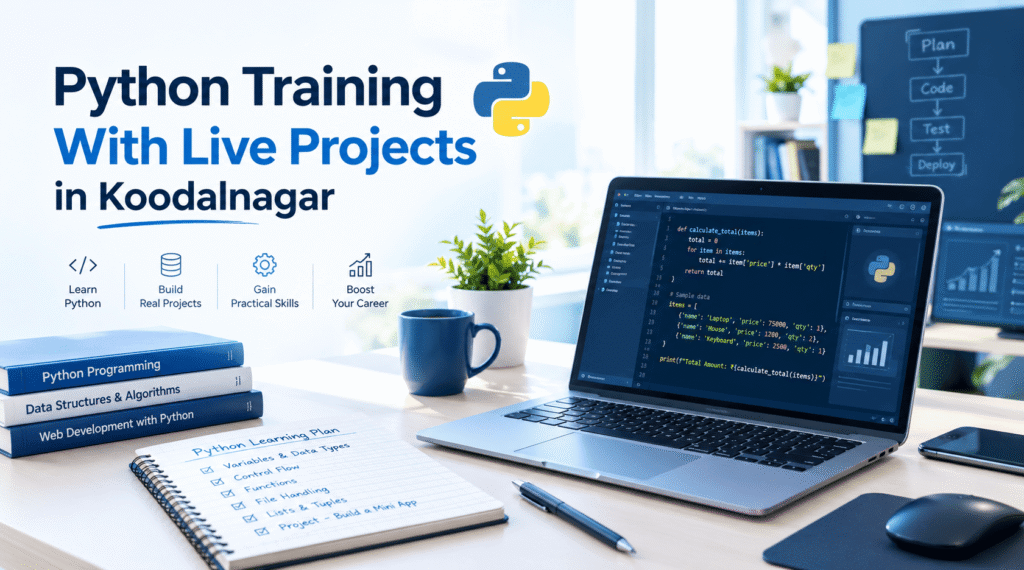
Python Training With Live Projects in Koodalnagar
Blog

Python Training With Live Projects in Koodalnagar

Python has become one of the most widely used and versatile programming languages in the tech industry today. From web development and automation to data analysis and artificial intelligence, Python powers millions of applications globally. For students, fresh graduates, and career changers living in Madurai, enrolling in Python Training With Live Projects in Koodalnagar offers a structured, practical way to build industry-ready skills and launch a career in software development. Whether you are completely new to programming or looking to upgrade your technical foundation, finding the right practical training program can make all the difference. This comprehensive guide covers everything you need to know about choosing the Best Python Training Institute in Koodalnagar Madurai, including fundamental core concepts, real-world portfolio projects, essential tools, interview preparation strategies, and a step-by-step 12-week learning roadmap. Why Choose Python Training With Live Projects in Koodalnagar? Choosing the right location and training model is crucial for effective skill building. A practical, job-oriented program focuses specifically on skills that software companies actively look for when hiring junior developers and technical trainees. Interactive coding session focusing on practical Python fundamentals. Learn Python from the Fundamentals Unlike generic academic courses that focus primarily on theory, a career-focused curriculum ensures you write real code from day one. Beginners learn essential syntax, data types, control flow structures, and core programming logic. By building strong fundamentals, you develop the confidence to solve complex algorithmic problems efficiently. For official documentation and language standards, the Python Software Foundation offers authoritative guides that complement your daily practical exercises. Practical Hands-On Learning with Real-World Coding Theory alone is not enough to secure a software development role. Seeking Python Training With Live Projects in Koodalnagar emphasizes writing clean code, debugging errors independently, and working on real-world assignments. Active coding practice helps solidify core concepts and prepares you for real-time technical tasks during job interviews. Guided Career Preparation and Mentorship A dedicated training program gives you access to structured guidance from experienced instructors. Mentors assist you in building resume-worthy projects, establishing a clean GitHub repository, and practicing coding problems under realistic interview conditions. Core Curriculum: What You Should Learn in a Python Course A well-structured Python course syllabus should bridge the gap between basic syntax and professional development practices. Below is an overview of key topics covered in a practical Python training curriculum. 1. Python Programming Fundamentals 2. Object-Oriented Programming (OOP) Concepts Object-Oriented Programming is essential for writing scalable, professional-grade applications: 3. File Handling & Exception Management 4. Database Integration & SQL Basics Modern applications depend on backend database interaction. Learning database fundamentals ensures comprehensive backend developer preparation: 5. Essential Development Tools (Git & GitHub) Understanding version control systems like Git is a non-negotiable requirement for software engineering jobs. Candidates should learn how to stage changes, make meaningful commits, manage branches, and push code repositories to GitHub to showcase their work to employers. You can read more about standard repository management practices on the GitHub Docs portal. Live Python Projects You Can Build During Training Developing software applications and tracking tools with Python. Employers value practical experience over static certification. Participating in Python Training With Live Projects in Koodalnagar allows you to build a portfolio that demonstrates your ability to apply Python syntax to solve actual business problems. Project 1: Student Record & Management System Project 2: Personal Expense & Budget Tracker Project 3: Automated Web Scraper or Task Automation Script How to Choose the Best Python Training Institute in Koodalnagar Madurai When evaluating training options, look for an institute that prioritizes individual mentoring and practical project building. Finding the Best Python Training Institute in Koodalnagar Madurai involves verifying that the curriculum includes modern tools, hands-on labs, database management, and structured interview preparation. Reviewing real-world project portfolios and code samples. Python Technical Interview Preparation Strategies Completing your training curriculum is the first step; mastering technical interview rounds is what ultimately secures job offers. Targeted Python Training With Live Projects in Koodalnagar incorporates explicit interview training throughout the learning program. Practise Common Python Interview Topics Prepare thoroughly for common technical questions focusing on: Solve Coding Problems Regularly Consistent practice on competitive coding platforms like LeetCode helps build algorithmic problem-solving speed. Focus on array manipulation, string processing, dictionary mappings, and simple recursion techniques. Build a Professional Resume and Tech Portfolio Present your technical skills effectively by following these standards: Structured 12-Week Python Learning Roadmap To maximize your training productivity, follow a well-organized schedule that balances conceptual learning with practical build exercises. Week Range Core Focus Area Deliverables & Milestones Weeks 1–3 Python Basics & Syntax Master variables, data types, loops, conditionals, and functions. Weeks 4–5 Advanced Logic & OOP Build modules, implement Object-Oriented concepts, and handle file I/O. Weeks 6–7 Databases & SQL Basics Integrate Python applications with SQLite/MySQL databases for persistent storage. Weeks 8–9 Portfolio Project Development Design, code, and test two standalone portfolio applications using Git version control. Weeks 10–12 Technical Interview Prep Practice algorithmic problem solving, refine your resume, and conduct mock interviews. Frequently Asked Questions (FAQs) 1. Is prior coding experience required for Python Training With Live Projects in Koodalnagar? No, prior programming experience is not strictly required. Python is renowned for its clean, human-readable syntax, making it the ideal language for absolute beginners starting their software development journey. 2. What job roles can I apply for after completing Python training in Madurai? After mastering Python fundamentals, database basics, and version control, candidates can apply for beginner and entry-level positions such as: 3. How long does it take to become job-ready in Python? With consistent daily practice (around 2 to 3 hours), a beginner can master essential Python programming concepts, build functional projects, and prepare for entry-level interviews within 12 to 16 weeks. Conclusion Enrolling in Python Training With Live Projects in Koodalnagar provides a clear path for aspiring developers to gain in-demand programming skills, build real-world project portfolios, and prepare effectively for technical software job interviews. Choosing the Best Python Training Institute in Koodalnagar Madurai ensures you focus on practical problem-solving, clean coding

Job Oriented Python Course in Koodalnagar
Blog

Job Oriented Python Course in Koodalnagar

Python has become one of the most widely used and versatile programming languages in the tech industry today. From web development and automation to data analysis and artificial intelligence, Python powers millions of applications globally. For students, fresh graduates, and career changers living in Madurai, enrolling in a Job Oriented Python Course in Koodalnagar offers a structured, practical way to build industry-ready skills and launch a career in software development. Whether you are completely new to programming or looking to upgrade your technical foundation, finding the right practical training program can make all the difference. This comprehensive guide covers everything you need to know about pursuing a Job Oriented Python Course in Koodalnagar, including fundamental core concepts, real-world portfolio projects, essential tools, interview preparation strategies, and a step-by-step 12-week learning roadmap. Why Choose a Job Oriented Python Course in Koodalnagar? Choosing the right location and training model is crucial for effective skill building. A job-oriented program focuses specifically on skills that software companies actively look for when hiring junior developers and technical trainees. Learn Python from the Fundamentals Unlike generic academic courses that focus primarily on theory, a career-focused curriculum ensures you write real code from day one. Beginners learn essential syntax, data types, control flow structures, and core programming logic. By building strong fundamentals, you develop the confidence to solve complex algorithmic problems efficiently. For official documentation and language standards, the Python Software Foundation offers authoritative guides that complement your daily practical exercises. Practical Hands-On Learning Theory alone is not enough to secure a software development role. A practical course emphasizes writing clean code, debugging errors independently, and working on real-world assignments. Active coding practice helps solidify core concepts and prepares you for real-time technical tasks during job interviews. Guided Career Preparation and Mentorship A dedicated Job Oriented Python Course in Koodalnagar gives you access to structured guidance from experienced instructors. Mentors assist you in building resume-worthy projects, establishing a clean GitHub repository, and practicing coding problems under realistic interview conditions. Core Curriculum: What You Should Learn in a Python Course A well-structured Python course syllabus should bridge the gap between basic syntax and professional development practices. Below is an overview of key topics covered in a practical Python training curriculum. 1. Python Programming Fundamentals 2. Object-Oriented Programming (OOP) Concepts Object-Oriented Programming is essential for writing scalable, professional-grade applications: 3. File Handling & Exception Management 4. Database Integration & SQL Basics Modern applications depend on backend database interaction. Learning database fundamentals ensures comprehensive backend developer preparation: 5. Essential Development Tools (Git & GitHub) Understanding version control systems like Git is a non-negotiable requirement for software engineering jobs. Candidates should learn how to stage changes, make meaningful commits, manage branches, and push code repositories to GitHub to showcase their work to employers. You can read more about standard repository management practices on the GitHub Docs portal. Hands-On Python Projects to Build a Job-Ready Portfolio Employers value practical experience over static certification. Completing portfolio-ready projects demonstrates your ability to apply Python syntax to solve actual business problems. Project 1: Student Record & Management System Project 2: Personal Expense & Budget Tracker Project 3: Automated Web Scraper or Task Automation Script Python Technical Interview Preparation Strategies Completing your training curriculum is the first step; mastering technical interview rounds is what ultimately secures job offers. A targeted Job Oriented Python Course in Koodalnagar incorporates explicit interview training throughout the learning program. Practise Common Python Interview Topics Prepare thoroughly for common technical questions focusing on: Solve Coding Problems Regularly Consistent practice on competitive coding platforms like LeetCode helps build algorithmic problem-solving speed. Focus on array manipulation, string processing, dictionary mappings, and simple recursion techniques. Build a Professional Resume and Tech Portfolio Present your technical skills effectively by following these standards: Structured 12-Week Python Learning Roadmap To maximize your training productivity, follow a well-organized schedule that balances conceptual learning with practical build exercises. Week Range Core Focus Area Deliverables & Milestones Weeks 1–3 Python Basics & Syntax Master variables, data types, loops, conditionals, and functions. Weeks 4–5 Advanced Logic & OOP Build modules, implement Object-Oriented concepts, and handle file I/O. Weeks 6–7 Databases & SQL Basics Integrate Python applications with SQLite/MySQL databases for persistent storage. Weeks 8–9 Portfolio Project Development Design, code, and test two standalone portfolio applications using Git version control. Weeks 10–12 Technical Interview Prep Practice algorithmic problem solving, refine your resume, and conduct mock interviews. Frequently Asked Questions (FAQs) 1. Is prior coding experience required to enroll in a Job Oriented Python Course in Koodalnagar? No, prior programming experience is not strictly required. Python is renowned for its clean, human-readable syntax, making it the ideal language for absolute beginners starting their software development journey. 2. What job roles can I apply for after finishing a Python training course? After mastering Python fundamentals, database basics, and version control, candidates can apply for beginner and entry-level positions such as: 3. How long does it take to become job-ready in Python? With consistent daily practice (around 2 to 3 hours), a beginner can master essential Python programming concepts, build functional projects, and prepare for entry-level interviews within 12 to 16 weeks. Conclusion Enrolling in a structured Job Oriented Python Course in Koodalnagar provides a clear path for aspiring developers to gain in-demand programming skills, build real-world project portfolios, and prepare effectively for technical software job interviews. By focusing on practical problem-solving, clean coding practices, and core computer science fundamentals, you build a solid foundation for a sustainable career in the technology industry. To ensure your web portfolio projects follow search engine standards for visibility, review guidelines directly from Google Search Central as you continue deploying your applications.

COA Certificate Course for Job Seekers in Madurai
Blog

COA Certificate Course for Job Seekers in Madurai

In today’s competitive employment market, digital literacy and administrative office skills have become basic requirements for many job roles. For fresh graduates, non-technical job seekers, and career changers living in Madurai, building practical computer skills is often the fastest way to secure an entry-level position. A COA Certificate Course for Job Seekers in Madurai offers a practical, structured pathway to master core computer software, document preparation, database maintenance, and internet tools needed in modern workplaces. Whether you are aiming for private-sector office jobs, preparing for government administrative recruitment, or upgrading your skills after a career gap, having a recognized Computer on Office Automation (COA) qualification can significantly enhance your resume. This comprehensive guide covers everything you need to know about pursuing a COA Certificate Course for Job Seekers in Madurai, including course eligibility, essential curriculum topics, local fee structures, career opportunities, and practical tips for selecting the right training institute. What Is a COA Certificate Course? Interactive learning session focused on essential office automation tools. A Computer on Office Automation (COA) course is a foundational training program designed to teach candidates how to use essential desktop software, operating systems, and administrative software applications effectively. While academic degrees focus on theoretical knowledge, a COA program emphasizes practical keyboard skills, document formatting, database queries, and electronic communication. For job seekers, completing a structured COA course demonstrates to employers that you possess hands-on technical competence and require minimal initial supervision when handling routine office tasks. Official guidelines and open-source office standards can be explored on the Document Foundation LibreOffice Docs portal, which offers documentation on standard word processing and spreadsheet frameworks. Why Is a COA Course Important for Job Seekers in Madurai? COA Certificate Course for Freshers in Madurai: Eligibility & Duration One of the biggest advantages of enrolling in a COA Certificate Course for Freshers in Madurai is its accessible entry requirement. Course Eligibility Criteria Course Duration Options Skills You Can Develop Through a COA Course A job-oriented COA curriculum focuses on practical exercises rather than passive lectures. Below are the primary technical skill sets you develop during your training. Developing word processing and spreadsheet calculations for daily administrative operations. 1. Operating System & File Management 2. Professional Word Processing 3. Spreadsheet Operations & Data Analysis 4. Database Basics & Data Entry 5. Digital Presentation & Communication Career Opportunities After a COA Certificate Course in Madurai Transitioning into entry-level office administration and technical data management. Enrolling in a COA Certificate Course for Job Seekers in Madurai opens doors across various industries, including healthcare, educational institutions, retail, logistics, manufacturing, and IT services. Job Role Key Responsibilities Target Salary Range (Entry-Level) Office Assistant / Coordinator Managing correspondence, filing documents, handling inquiries ₹12,000 – ₹18,000 / month Data Entry Operator (DEO) Accurate numerical and textual data entry into database systems ₹10,000 – ₹15,000 / month Front Office / Receptionist Managing visitor logs, emails, scheduling appointments, invoices ₹11,000 – ₹16,000 / month Billing & Computer Operator Generating retail invoices, maintaining inventory spreadsheets ₹12,000 – ₹17,000 / month Administrative Support Specialist Supporting department leads with documentation and presentation slides ₹15,000 – ₹22,000 / month To learn more about global standards for digital workplace tools and administrative certifications, visit the official Microsoft Learn resources page for structured training materials. Understanding COA Course Fees in Madurai The total cost for a COA certification training program varies based on the institute, lab facilities, and course duration. How to Choose the Best COA Training Institute in Madurai Evaluating course structure, practical lab availability, and certification options. Selecting the right institute ensures you receive genuine practical exposure rather than basic theoretical lectures. Consider this evaluation checklist before enrolling: 1. Hands-On Computer Lab Ratio Verify that the institute guarantees a 1:1 student-to-computer ratio during lab hours so you get maximum time to practice applications independently. 2. Practical Certification Standards Check whether the certificate provided is recognized by local employers or affiliated with established technical education boards. 3. Interview and Resume Support Look for institutes that assist with building a professional resume, practicing typing speed tests, and preparing for entry-level computer operator interviews. Frequently Asked Questions (FAQs) 1. Is a COA Certificate Course suitable for non-computer background students? Yes, absolutely. The curriculum is specifically structured for beginners. It starts with basic computer operational concepts before moving step-by-step into advanced document formatting and spreadsheet calculations. 2. Can I take a COA Certificate Course while pursuing a college degree? Yes. Many institutes in Madurai offer flexible morning, evening, and weekend batches that accommodate standard college hours. 3. Does a COA course help with government job applications? Yes. Many state government recruitment drives, public sector notifications, and local board exams require candidates to hold a valid computer automation certificate or demonstrate equivalent computer eligibility. Conclusion Completing a COA Certificate Course for Job Seekers in Madurai is an effective step toward securing entry-level employment in today’s technology-driven administrative sector. By building practical proficiency in word processing, spreadsheets, databases, and internet communication tools, you transform your resume and gain the confidence to excel in modern office environments.

Beginner learning Python coding on a laptop
Blog

Python Coding Course for Non-IT Students in Madurai

Python coding course for non-IT students in Madurai is one of the smartest steps you can take today. Entering the tech world without a technical background can feel overwhelming. Many career switchers and graduates wonder if they can transition into software development without a computer science degree. The good news is that learning programming is entirely possible, especially when you choose a user-friendly language. If you are looking to start your tech journey, enrolling in a Python coding course for non-IT students in Madurai is one of the smartest steps you can take today. Python has rapidly become the world’s most popular programming language due to its simplicity and readability. Whether you want to pursue data science, web development, or automation, mastering this language opens doors to numerous career opportunities. Why Python is Ideal for Non-IT Backgrounds For beginners, diving straight into complex languages like C++ or Java can lead to frustration. Python, however, was designed with code readability in mind. Its syntax closely resembles standard English, making it much easier to grasp for individuals coming from arts, commerce, or other non-technical backgrounds. Furthermore, Python’s versatility means you are not locked into a single career path. According to industry insights shared by resources like FreeCodeCamp, Python’s extensive ecosystem of libraries allows beginners to build real-world projects quickly. This hands-on approach keeps motivation high during the learning process. Key Benefits of Joining a Python Coding Course for Non-IT Students in Madurai Studying locally offers distinct advantages, from personalized mentorship to networking opportunities within the growing tech hub of Tamil Nadu. Here is why joining a structured program in Madurai works so well: To understand how structured learning paths compare with self-taught routes, you can explore insights from Coursera regarding programming education standards. Core Concepts Covered in a Quality Python Program A comprehensive Python coding course for non-IT students in Madurai typically bridges the gap between theoretical knowledge and practical execution. A standard curriculum includes: For official documentation and language updates, developers frequently reference the Python Software Foundation, which provides exhaustive guides for learners at all stages. Additionally, keeping up with software design patterns via Mozilla Developer Network can help broaden your engineering perspective. Career Opportunities After Completion Once you finish your training, a wide array of career options becomes accessible. You do not need an engineering degree to secure an entry-level position if your portfolio demonstrates genuine coding competence. Common roles include: Many hiring managers prioritize practical problem-solving skills over formal degrees. Organizations often rely on platforms like GitHub to evaluate candidate projects, making your personal portfolio repository a vital asset during job applications. Conclusion Transitioning into technology requires dedication, the right guidance, and consistent practice. By choosing a specialized Python coding course for non-IT students in Madurai, you gain a structured pathway to mastering one of the most in-demand skills in the modern job market. Take the first step today, build your portfolio, and open the door to exciting new career possibilities.

Beginner learning Python programming online on a laptop
Blog

Best Python Course for Beginners Online in Koodal Nagar, Madurai

The best Python course for beginners online should match your current knowledge, available study time, learning style and career goals. You do not need to be a mathematics expert or have previous programming experience to get started. What matters most is learning the fundamentals step by step and practising regularly. In this guide, you will learn what to look for in an online Python course, which topics a beginner should study, how to compare training options, which projects to build and how to prepare for your first programming opportunity. You can also explore foundational resources like Microsoft Excel Support or industry reports on Naukri Career Insights to guide your tech skill development. 1. Why Should Beginners Learn Python Online? Python is a widely used programming language known for its readable syntax. It allows beginners to focus on solving problems rather than spending too much time understanding complicated code structures. For learners in Koodal Nagar and other parts of Madurai, online training also offers flexibility. You can study from home, revise difficult lessons and practise coding around college or work commitments. Easy to understand for first-time learners Consider this simple Python example: name = “Arun” print(“Hello”, name) This code stores a name in a variable and displays a greeting. You can understand its purpose without learning many complicated rules first. As you progress, you will learn how to make decisions, repeat tasks, organise information and build small applications. Learn from home at your own pace Online courses generally offer one or more of the following learning formats: Before enrolling, check which format is actually included. A course advertised as online training may provide only recorded videos, without live support or personal feedback. Explore different career directions Python is used in several technical fields, including: A beginner course does not automatically qualify you for these jobs. It provides the foundation you can build on through further study, practical projects and relevant experience. Is Python suitable for beginners? Yes. Python is a suitable first programming language because its syntax is relatively readable and it supports many practical applications. Beginners can start with basic coding before moving to specialised areas. 2. How to Choose the Best Python Course for Beginners Online The right course should teach you how to write and understand code, not simply help you finish videos. Compare the course structure, practice opportunities, instructor support and total cost before making a decision. Check the syllabus before paying A good beginner syllabus should progress from basic concepts to small, practical programmes. Topic What you should learn Introduction to Python What Python is and how to run a programme Variables and data types Store text, numbers and other values Operators Perform calculations and comparisons Conditional statements Use if, elif and else Loops Repeat tasks with for and while Data structures Work with lists, tuples, dictionaries and sets Functions Organise reusable blocks of code File handling Read from and write to files Error handling Understand and manage common errors Modules Reuse functionality from Python libraries Projects Combine concepts to solve simple problems Some courses may introduce object-oriented programming, databases or external libraries. These can be useful, but a complete beginner should first understand variables, conditions, loops, functions and basic data structures. You can check external resources like the W3Schools Python Tutorial for additional explanations. Look for hands-on coding practice Watching an instructor write code is not the same as writing it yourself. Choose a course that includes exercises after each topic. For example, after learning conditional statements, try writing a programme that checks whether a number is positive, negative or zero. After learning loops, create a multiplication table generator. Useful course features include: If a course does not offer assignments, you can still practise independently, but you will need to plan your own exercises and check your solutions. Compare live classes and recorded lessons Neither format is automatically better. Your choice depends on how you prefer to learn. Feature Recorded course Live online course Flexible timing Usually high Depends on the timetable Ability to replay lessons Usually available Depends on recordings Immediate questions Often limited Usually possible during class Learning pace Self-controlled Guided by the instructor Personal feedback Depends on the platform Depends on class size and support If you are new to programming and often need help understanding errors, live classes or mentor support may be useful. If your schedule changes frequently, recorded lessons may be more convenient. Before paying for live training, ask whether classes are recorded, how doubts are resolved and whether missed sessions can be made up. Verify the certificate and course provider Many online programmes provide certificates after completion. However, certificates differ in their purpose and recognition. Check these details before enrolling: A certificate can document your learning, but it does not guarantee employment. Employers may also look for coding ability, problem-solving skills, project experience and communication. Avoid enrolling solely because an advertisement promises a guaranteed job or unusually high salary after a short course. You can research broader career expectations via the LinkedIn Learning Blog. 3. What Will You Learn in a Beginner Python Course? The best Python course for beginners should provide a strong foundation before introducing advanced subjects. Here are the essential topics and examples you should understand. Python basics and variables Variables allow you to store information for later use. student_name = “Meena” age = 20 course = “Python” print(student_name) print(age) print(course) You should learn how to create variables, work with strings and numbers, accept user input and display results. A useful practice exercise is to create a programme that asks for a student’s name and three subject marks, then displays the total. Conditional statements and loops Conditional statements allow programmes to make decisions. mark = 75 if mark >= 40:     print(“Pass”) else:     print(“Fail”) Loops help you repeat instructions without writing the same code several times. These concepts are essential for building calculators, quiz programmes and simple data-processing tools. Lists, dictionaries and functions Lists store collections of items, while dictionaries store information as

Excel data analysis course for beginners in Madurai
Blog

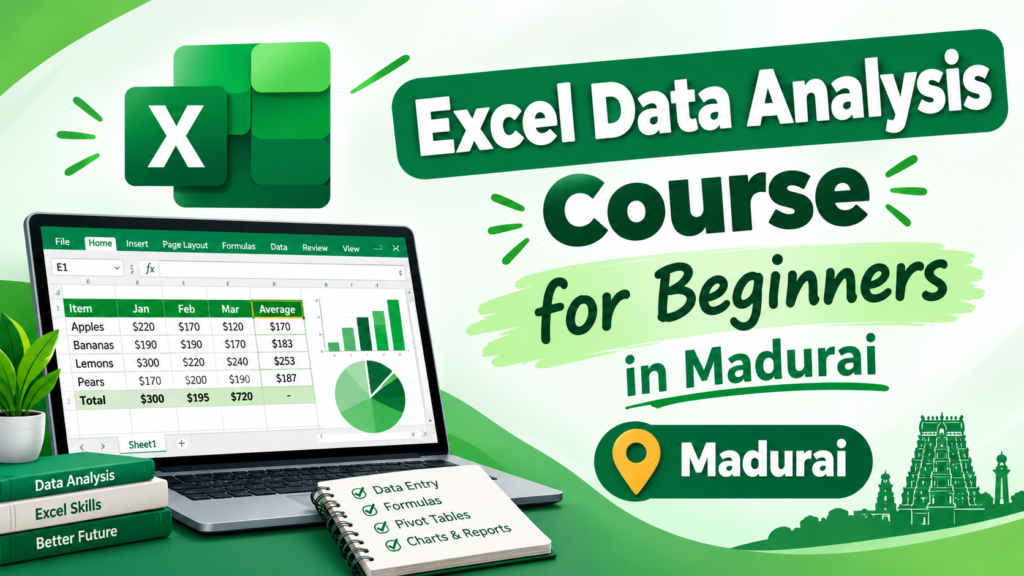
Excel Data Analysis Course for Beginners in Madurai

1. What Is Excel Data Analysis, and Why Should Beginners Learn It? Excel data analysis is the process of organising, checking, calculating, summarising and interpreting information using spreadsheet tools. The aim is to turn raw data into useful information that supports decisions. For example, a shop may have hundreds of sales records. By using Excel, the owner can calculate total sales, identify popular products and compare sales across different months. You do not need to be a mathematics expert to begin. Basic arithmetic, attention to detail and a willingness to practise are enough to get started with beginner-level analysis. Benefits of learning Excel data analysis Who can join a beginner Excel data analysis course? A beginner course may be useful for: If you are completely new to Excel, choose a course that teaches spreadsheet basics before moving to advanced analysis. You can also research broader job skill standards via platforms like Naukri Career Insights. 2. Essential Excel Data Analysis Skills You Should Learn A useful beginner course should teach you how to work with a dataset from start to finish. The following skills provide a practical learning path. Excel basics and data formatting Before analysing data, you need to know how to enter, arrange and format it correctly. Start by learning how to: Example: Imagine a spreadsheet containing student names, departments, attendance percentages and internal marks. Sorting can arrange students by marks, while filters can display students from a particular department. Correct formatting also matters. If dates are inconsistent or numbers are stored as text, calculations and comparisons may not work as expected. Important Excel formulas and functions Formulas help you calculate results and summarise information. Function Purpose Example SUM Adds numbers Total monthly sales AVERAGE Calculates the mean Average test score COUNT Counts numeric cells Number of recorded transactions COUNTA Counts non-empty cells Number of filled customer records IF Returns a result based on a condition Marking a payment as Paid or Pending COUNTIF Counts cells matching a condition Number of orders marked Delivered SUMIF Adds values matching a condition Sales total for one product IFERROR Handles formula errors with a specified result Displaying a helpful message when a calculation fails For example, if sales amounts are stored in cells C2 through C20, this formula calculates their total: =SUM(C2:C20) To count how many records in column D are marked “Pending,” you could use: =COUNTIF(D2:D20,”Pending”) Practise each formula with sample data. Check whether the result makes sense instead of assuming the spreadsheet is always correct. For additional formula breakdowns, check out the W3Schools Excel Tutorial. Data cleaning and preparation Data cleaning means identifying and correcting issues that could affect analysis. This is an important skill because even a well-written formula can produce misleading results when the underlying information is inaccurate. Learn how to: For example, a sales spreadsheet might contain the same product under the names “Blue Pen,” “blue pen” and “Blue pen ”. These entries may refer to the same item, but inconsistent text can affect summaries. Clean the data before calculating totals or creating charts. Keep an unchanged copy of the original dataset so you can check your corrections if necessary. PivotTables and data summarisation PivotTables help you summarise a dataset without writing a separate formula for every group. You can use them to answer questions such as: Suppose a spreadsheet has 500 sales records. A PivotTable can group the records by product and calculate the total sales for each product. A beginner course should ideally include guided exercises on creating PivotTables, changing summary calculations and filtering the results. Charts and data visualisation Charts help people understand comparisons and trends quickly. Common Excel charts include: Choose a chart based on the question you want to answer. For example, a line chart is often suitable for showing monthly sales trends, while a bar chart can make product comparisons easier. Avoid adding too many colours, labels or unnecessary effects. A chart should make the finding clearer, not more complicated. 3. How to Choose an Excel Data Analysis Course in Madurai When comparing Excel training options in Madurai, look beyond the course name. Two providers may both advertise Excel training but offer different levels of practical instruction. A suitable course should match your current knowledge, learning goals, available time and budget. Check the course syllabus Ask for the complete syllabus before enrolling. For an Excel data analysis course for beginners in Madurai, look for topics such as: Some courses may also include lookup functions, Power Query or dashboard creation. These can be valuable additions, but make sure you understand the basics first. Prioritise hands-on practice Data analysis is a practical skill. Watching a trainer demonstrate a formula is useful, but you also need to write formulas and solve problems independently. Ask the training provider: A useful course should allow you to practise the entire process: prepare data, analyse it, check the results and present a clear summary. Compare course duration, fees and certificate details Course length and fees vary between training providers. Confirm the total cost and what is included rather than relying only on an advertised starting price. Factor What to check Course level Is it designed for complete beginners? Syllabus Does it cover practical data analysis? Practice Are computer sessions and assignments included? Trainer support Can you receive feedback on your work? Duration Is there sufficient time to practise? Fees Are registration, assessment and certificate charges included? Certificate Who issues it, and what are the completion requirements? Learning materials Are sample files or practice datasets provided? If a certificate is important to you, ask whether it is a course-completion certificate from the training centre or a separate external certification. Do not assume that a certificate is an official Microsoft certification unless the provider can verify that claim. How to compare local training options You can search for phrases such as: Check current course details, recent student feedback, trainer experience and the provider’s official information. Contact the centre directly to confirm fees, class timings, syllabus and certificate conditions. To

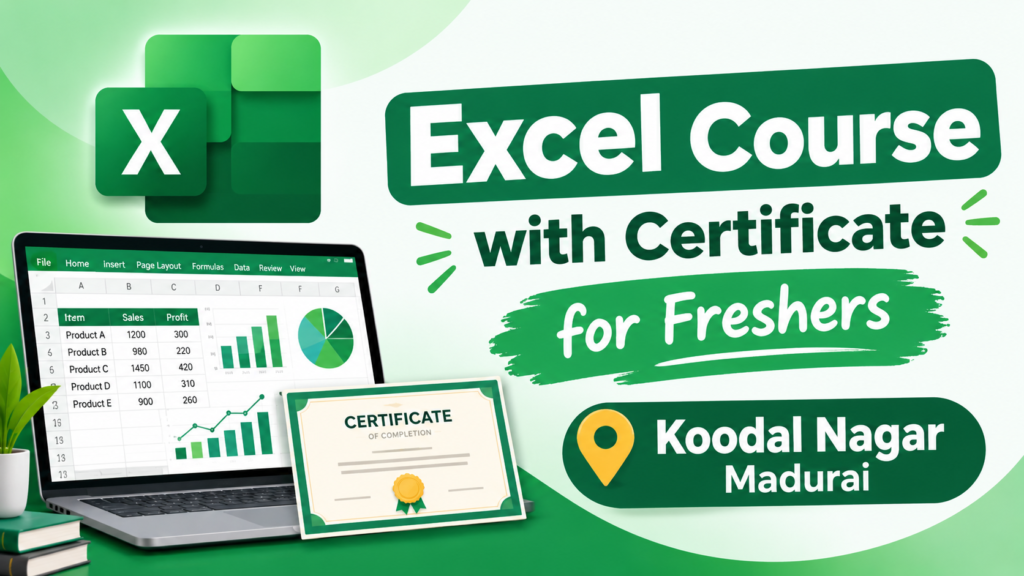
Excel course with certificate for freshers in Koodal Nagar, Madurai
Blog

Excel Course with Certificate for Freshers in Koodal Nagar, Madurai

1. Why Should Freshers Learn Microsoft Excel? Microsoft Excel is a spreadsheet application that helps users organise information, perform calculations and present data clearly. It is commonly used in office administration, accounting, sales, inventory management and many other business activities. For freshers, Excel offers a practical way to develop computer skills before applying for entry-level jobs. To check industry standards and broader tech skill requirements, you can review guidelines on Naukri Career Insights. Important benefits of learning Excel Who can join an Excel course? A beginner-level Excel course may be suitable for: You generally do not need advanced computer knowledge to begin learning Excel. Basic familiarity with a computer, keyboard and mouse is helpful. Check the training provider’s eligibility requirements before enrolling. 2. What Does an Excel Course for Beginners Teach? The best Excel course for the beginners is one that starts with the fundamentals and gradually introduces practical tasks. A good course should give you enough time to practise rather than relying only on demonstrations. Course content and duration vary between training providers, so ask for the syllabus before paying the fee. Excel basics and spreadsheet formatting At the beginning, you should learn how to create and save workbooks, enter information into cells, edit data and organise worksheets. Typical beginner topics include: These features help you prepare clean, readable spreadsheets for everyday office work. Practical example: You could create a student fee register with columns for student name, course, fee amount, payment date and balance. Formatting and filtering make the information easier to review. Essential Excel formulas and functions Formulas are an important part of Excel training because they help you calculate values automatically. Formula or function What it does Example use SUM Adds values Calculating total expenses AVERAGE Finds the average Calculating average sales COUNT Counts cells containing numbers Counting recorded transactions IF Returns a result based on a condition Showing Paid or Pending COUNTIF Counts cells matching a condition Counting pending payments SUMIF Adds values matching a condition Total sales for one product ROUND Rounds a number Displaying amounts to two decimal places You should practise practise writing formulas, copying them across rows and checking the results. Understanding why a formula works is more valuable than memorising it. For example, if expense amounts are listed in cells B2 to B10, you can use =SUM(B2:B10) to calculate the total. You can also refer to external documentation via W3Schools Excel Tutorial for additional formula breakdowns. Intermediate skills to look for After learning the basics, you may want to explore additional features such as: Not every beginner course covers all these topics. If you need them for a particular job, confirm that they are included in the syllabus. 3. How to Choose an Excel Course with Certificate in Koodal Nagar, Madurai If you live in or near Koodal Nagar, you may prefer a nearby computer training centre because travelling less can make it easier to attend classes regularly. However, location should not be your only deciding factor. Compare the teaching method, syllabus, practical sessions, fee and certificate details before enrolling. Check the syllabus before joining Ask the training centre for a written syllabus. Make sure it explains what you will learn and whether the course is designed for complete beginners. A useful beginner syllabus should normally cover: If you want Excel for accounting, ask whether the course includes expense statements, invoices, payment registers or similar examples. If your goal is data-related work, ask about charts, PivotTables and lookup functions. Understand the certificate offered Not all Excel certificates are the same. Before enrolling, ask the provider these questions: A training-centre completion certificate is different from a certification awarded by an external organisation. Neither should be described as an official Microsoft certification unless it genuinely meets the relevant certification requirements. Compare teaching methods and fees Try to understand how the course works before making a payment. Factor What to check Course level Is it suitable for complete beginners? Practical training Will you work on a computer during class? Trainer support Can you ask questions and receive corrections? Class schedule Does it fit your college, work or other commitments? Course duration Is there enough time to practise each topic? Fees Are registration, examination and certificate charges included? Certificate Who issues it, and what are the completion requirements? Practice materials Are exercises or sample files provided? There is no need to choose a course simply because it advertises a low fee or a quick certificate. Focus on the practical skills you will gain for the amount you pay. How to find a suitable training centre To compare options in Koodal Nagar and nearby parts of Madurai, you can search for phrases such as: Check current course information, recent student feedback and the provider’s official details. Contact the centre directly to confirm availability, fees, timings and certification. You can also research local educational listings via platforms like Justdial Madurai. This guide does not verify or rank a particular training centre in Koodal Nagar. Confirm these details with the provider before making your decision. 4. What Practical Projects Should You Complete During Excel Training? A course becomes more useful when you apply what you learn to realistic tasks. Projects also help you explain your skills during an interview. You do not need complicated projects at the beginner stage. Start with small spreadsheets and improve them as you learn new functions. Project 1: Monthly income and expense sheet Create a spreadsheet with columns for date, description, income, expenses and balance. Use formulas to calculate: This project teaches data entry, number formatting, formulas and basic financial organisation. Project 2: Student fee or payment register Create a table with student names, fee amounts, amounts paid and outstanding balances. Use subtraction to calculate each balance. You can also practise sorting and filtering to identify pending payments. This project is useful for learning how spreadsheet records can support administrative tasks. Project 3: Sales report Prepare a sample sales table with product names, quantities, prices and total sales. You can calculate

Excel course for accounting and finance students in Madurai
Blog

Excel course for accounting and finance students in Madurai

Introduction Accounting and finance students work with numbers every day. Knowing accounting concepts is only one part of preparing for a professional career. Employers expect you to organize financial information, calculate figures accurately, prepare reports, and explain what the numbers mean. Microsoft Excel brings these skills together. Whether you are studying B.Com, B.Com Accounting and Finance, BBA, M.Com, or another commerce-related course, learning Excel makes your academic work more practical. It prepares you for tasks you will do in offices, banks, and finance departments. An excel course for accounting and finance students in Madurai helps you develop these skills through spreadsheet exercises, financial calculations, data management, and reporting. Not every course covers the same topics. Some focus on basic data entry, while others introduce advanced formulas, PivotTables, financial functions, and dashboards. This guide explains which Excel skills matter most for accounting and finance students, how to use them in real situations, what to look for when choosing a training centre, and how to build practical projects that show your abilities. Why is Excel important for accounting and finance students? Microsoft Excel is a spreadsheet application used to organize information, perform calculations, analyse data, and prepare reports. It is useful in accounting because financial information often needs checking, summarizing, and presenting in a clear format. An accountant uses Excel to compare monthly expenses, prepare a cash flow summary, or identify differences between expected and actual spending. Common uses of Excel in accounting Excel supports many routine accounting activities: Consider a small shop recording its sales every day. Instead of calculating monthly sales manually, you can use Microsoft Excel functions and formulas to add daily figures, compare sales across months, and find the top products. This approach saves time and makes calculations easier to review. The quality of the result still depends on accurate source data and correct formulas. How finance students can use Excel Finance students apply Excel to budgeting, investment calculations, loan comparisons, and financial planning exercises. You can create a monthly budget containing income, rent, travel expenses, food costs, and savings. Formulas calculate total expenditure and show how much money remains. Students studying corporate finance use spreadsheets to compare financial ratios, analyse business performance, and run basic forecasting exercises. For broader insights on analytical methodologies, review the CFA Institute financial reporting resources to see industry standards. Essential Excel skills every accounting student should learn A useful Excel course moves from basic spreadsheet operations to financial calculations and reporting. You need to understand how a function works and when to use it. A. Spreadsheet basics and data formatting Begin by learning how to create workbooks, enter data, format cells, and organize worksheets. Important skills include: Create a monthly expense register with columns for date, voucher number, expense category, description, and amount. Format the amount column consistently and calculate total expenses at the bottom. Consistent formatting makes a spreadsheet readable and reduces confusion when reviewing financial records. B. Excel formulas and functions Formulas are among the most important skills for students working in accounting or finance. The following functions are useful: Excel function Accounting or finance application SUM Calculate total sales, expenses, or payments AVERAGE Find average monthly expenditure IF Check whether a condition is satisfied SUMIF Total expenses for a selected category COUNTIF Count transactions meeting a condition XLOOKUP Retrieve matching information from another table IFERROR Handle specified formula errors ROUND Round calculated amounts to a chosen number of digits Suppose cell B2 contains total monthly expenses. To check whether expenses exceed a budget of ₹20,000, use: =IF(B2>20000,”Over Budget”,”Within Budget”) Excel displays the appropriate result based on the value in B2. Understand relative and absolute cell references. Absolute references, like $B$2, are useful when a formula must continue referring to the same cell while you copy it to other rows. C. Financial calculations A finance-focused course includes exercises related to interest, repayments, cash flow, and investment analysis. Depending on the syllabus, you may learn functions such as: These functions are useful in financial modelling, but they require careful interpretation. You must understand assumptions like interest rates, payment periods, cash flow timing, and whether payments occur at the beginning or end of a period. Excel performs calculations, but it cannot determine whether the financial assumptions you enter are reasonable. D. Data cleaning and error checking Financial spreadsheets contain duplicate transactions, incorrect dates, missing values, or inconsistent account names. Learning to identify these problems is essential. A good training programme introduces tools like Remove Duplicates, Find and Replace, Data Validation, Text to Columns, and sorting and filtering. Before removing duplicates or changing financial records, preserve a backup and verify the original data. Two transactions with the same amount are not necessarily duplicates because their dates, references, and supporting documents may differ. Excel projects that connect classroom learning with real accounting work The best way to understand Excel is to practise with realistic examples. You can create sample workbooks using fictional data instead of confidential information from a company or client. Project 1: Monthly income and expense statement Create a spreadsheet containing income sources, expense categories, transaction dates, and amounts. Include formulas to calculate: If monthly income is ₹30,000 and total expenses are ₹22,000, the remaining balance is ₹8,000. This project teaches you how to structure financial data and summarize results. Project 2: Accounts receivable tracker Businesses monitor invoices and outstanding customer payments. You can build a tracker containing invoice numbers, customer names, invoice dates, due dates, amounts, and payment status. Useful Excel features include date formatting, filters, conditional formatting, and the IF function. The workbook highlights invoices past their due dates when payment status and dates are entered correctly. Project 3: Budget versus actual report A budget report compares planned spending with actual expenditure. Expense category Budget Actual Difference Rent ₹10,000 ₹10,000 ₹0 Travel ₹3,000 ₹3,500 -₹500 Office supplies ₹2,000 ₹1,600 ₹400 Utilities ₹2,500 ₹2,300 ₹200 A positive difference means spending was below budget, while a negative difference means actual spending exceeded budget. The report should state this convention because other

Best Excel course for business and data management in Koodal Nagar, Madurai
Blog

Best Excel Course for Business and Data Management in Koodal Nagar

Microsoft Excel is one of the most useful tools for managing business information, organizing records, preparing reports, and analyzing data. From small businesses to large companies, professionals use Excel to track expenses, monitor sales, maintain customer details, and make informed decisions. If you are looking for the best Excel course for business and data management in Koodal Nagar, choosing the right training program can help you develop practical skills that are useful in many office-based jobs. However, not every Excel course teaches the same things. Some focus only on basic spreadsheets, while others cover advanced formulas, PivotTables, dashboards, and business reporting. The right course should match your current knowledge, career goals, learning preferences, and budget. You can also explore essential data analysis skills to see how spreadsheet tools fit into broader analytical paths. In this guide, you will learn what an Excel course should include, which skills are important for business and data management, how to compare training options in Madurai, and what to consider before enrolling. Why Is Excel Important for Business and Data Management? Microsoft Excel is a spreadsheet application that helps users store, organize, calculate, and analyze information. It is widely used because it combines simple data entry with powerful calculation and reporting features. For businesses, Excel can turn a collection of numbers into useful information. For example, a shop owner can record daily sales, compare monthly revenue, calculate expenses, and identify popular products using a single workbook. Learning Excel is particularly helpful for students, fresh graduates, office administrators, accountants, and people who want to improve their computer skills. 1. Organizing Business Information Businesses handle different types of information, including customer records, product details, employee information, invoices, and payments. Excel allows users to arrange these details in rows and columns, sort records, filter information, and find specific entries quickly. Practical example: A retail shop can maintain a spreadsheet containing product names, purchase prices, selling prices, available stock, and sales quantities. 2. Performing Calculations Automatically Excel formulas reduce the need for repeated manual calculations. Functions such as SUM, AVERAGE, IF, COUNTIF, and SUMIF help users calculate totals, evaluate conditions, and summarize business data. For instance, an employee can use a formula to calculate monthly expenses or identify whether a sales target has been achieved. 3. Preparing Reports and Charts Managers often need reports that communicate information clearly. Excel can convert raw data into tables, charts, and summary reports. These features are useful for comparing monthly sales, monitoring expenditure, tracking employee attendance, and presenting business performance. 4. Supporting Better Business Decisions Accurate data helps business owners understand what is happening in their operations. Excel makes it easier to identify trends, compare results, and recognize areas that need attention. Although Excel cannot replace sound business judgment, it can provide information that supports more informed decisions. What Should the Best Excel Course for Business and Data Management Include? When comparing training options in Madurai, look beyond the course title. A useful program should teach practical skills that you can apply to real business situations. Ideally, the course should progress from basic spreadsheet operations to data analysis and reporting. 1. Excel Basics and Spreadsheet Management Beginners should first understand the Excel interface and learn how to create and manage worksheets. Important topics include: These fundamentals are important because accurate data entry and clear formatting make spreadsheets easier to use and maintain. Practice task: Create a monthly expense sheet with columns for date, expense category, description, and amount. Format the amounts as currency and calculate the total expenditure. 2. Excel Formulas and Functions Formulas are among the most important skills for business and data management. A good Excel course should explain how formulas work, when to use different functions, and how to identify common formula errors. You can check official Microsoft Excel documentation to explore additional function guidelines. Formula or function Business application SUM Calculate total sales or expenses AVERAGE Find average monthly sales IF Check whether a target has been achieved COUNTIF Count records matching a condition SUMIF Calculate sales for a particular category XLOOKUP Retrieve matching information from another table IFERROR Handle specified formula errors SUBTOTAL Calculate summaries for filtered lists For example, suppose a salesperson has a monthly target of ₹50,000. The following formula checks whether the sales target has been achieved: =IF(B2>=50000,”Target Achieved”,”Target Not Achieved”) If cell B2 contains the salesperson’s total sales, Excel displays the appropriate result. Students should also understand relative and absolute cell references, as these are essential when copying formulas across a worksheet. 3. Data Cleaning and Management Business data is not always perfectly organized. It may contain duplicate records, inconsistent names, missing values, or incorrect date formats. A practical Excel course should teach learners how to identify and correct these problems before analyzing the information. Useful tools include: Practical example: Imagine a customer database contains the same customer several times, with telephone numbers entered in different formats. Data-cleaning techniques can help standardize the information and reduce errors. Remember that removing duplicates or replacing values should be done carefully. Always check the original data and retain a backup before making significant changes. 4. PivotTables and Data Analysis PivotTables help users summarize large datasets without manually calculating every total. They can group information by category, compare results, and show patterns in business data. For example, a company with thousands of sales transactions can use a PivotTable to find: PivotTables are especially valuable for people interested in reporting, administration, accounting support, and entry-level data analysis. A course should provide practice datasets so learners can build PivotTables themselves rather than simply watch demonstrations. 5. Charts, Dashboards, and Business Reporting A dashboard presents important information in a clear, visual format. It may contain sales totals, performance indicators, charts, and category-wise comparisons. A useful Excel training program should cover chart selection, conditional formatting, summary tables, and dashboard design. For example, a small business owner could create a monthly sales dashboard displaying total revenue, top-selling products, expenses, and sales trends. When creating a dashboard, prioritize clarity over decoration. Use appropriate

Computer instructor guiding a student during practical training
Blog

Affordable COA Computer Course in Madurai

Introduction Computer skills have become an important part of education, office administration and many entry-level jobs. Whether you are a college student, a recent graduate, a job seeker or someone planning to return to work, learning basic computer applications can help you feel more confident when handling everyday office tasks. However, choosing a computer course is not always easy. Some learners want practical training but need to stay within a limited budget. Others want to learn office applications, improve their typing skills and understand how computers are used in real workplaces without spending money on an advanced course they do not need. An Affordable COA Computer Course in Madurai may be a suitable option for learners who want to develop foundational computer knowledge and office application skills at a reasonable cost. Before enrolling, it is important to understand what COA means in the institute’s curriculum, which topics are included, how much practical training is offered and whether the course matches your career goals. In this guide, you will learn what to look for in a COA computer course, the skills you may develop, the factors that influence course fees, the benefits of practical learning and how to choose a suitable training institute in Madurai. 1. What Is a COA Computer Course? COA commonly stands for Computer on Office Automation or Certificate in Office Automation, depending on the institution. The exact expansion, syllabus and certificate offered can vary between training providers. A COA-oriented course generally focuses on foundational computer operations and the applications used for common office tasks. It may introduce learners to creating documents, organising information, preparing spreadsheets and handling basic digital work. The main purpose is to help students understand how to use a computer for education, administration and everyday workplace responsibilities. Topics Commonly Included in COA Training Depending on the institute’s syllabus, a COA course may cover the following areas: Who Can Join an Affordable COA Computer Course? A foundational computer course may be useful for: Eligibility requirements depend on the individual training provider. Ask about the minimum educational qualification, course duration and any admission requirements before registering. 2. Why Choose an Affordable COA Computer Course in Madurai? The right course should balance cost, practical learning and useful skills. A low fee can be attractive, but it should not be the only factor in your decision. Learn Essential Office Computer Skills Many entry-level office tasks involve preparing documents, maintaining records, organising information and communicating through email. For example, an administrative assistant may need to prepare a letter in a word processor, update a spreadsheet and send the completed document to a supervisor. A well-structured COA course can introduce learners to these tasks and provide opportunities to practise them. Build Confidence Through Practical Training Reading about computer applications is different from using them independently. Practical sessions allow students to learn how to: When comparing institutes, ask how much time students spend practising on computers rather than listening to explanations alone. Educational research highlighted by organizations like UNESCO consistently emphasizes that active, hands-on technical training leads to much better skill retention than passive listening. Develop Skills for Further Learning COA training may provide a foundation for additional courses, such as advanced spreadsheet applications, accounting software, desktop publishing or other job-related computer programs. For example, a student who becomes comfortable with spreadsheet basics may later decide to study advanced Excel features for reporting and data management. Choose additional training based on the skills required for your intended career rather than enrolling in multiple courses without a clear goal. Learn Within Your Budget An affordable course can make computer education more accessible to students and job seekers. However, affordability should be evaluated against the training provided. A slightly higher fee may be worthwhile if it includes sufficient practical sessions, learning materials and individual guidance. The best choice is a course that meets your learning needs without placing unnecessary financial pressure on you. 3. COA Computer Course Fees: What Should You Check? One of the first questions learners ask is how much an affordable COA computer course costs. There is no single fee that applies to every institute in Madurai. The total cost depends on the syllabus, training duration, class schedule, facilities and certificate arrangements. Rather than relying on an advertised starting price, request a complete fee breakdown from the institute. Factors That Affect Course Fees Factor What to Check Course duration How many weeks or months are required to complete the syllabus? Practical sessions How much individual computer practice is included? Class size Will you receive enough guidance during practical work? Learning materials Are notes, assignments or practice files included? Examination fees Is there a separate assessment or examination charge? Certificate Who issues the certificate, and are any additional charges applicable? Timings Are weekday, weekend or flexible batches available? Software coverage Which applications and versions are taught? These details help you compare courses fairly and avoid unexpected expenses. How to Compare Two Affordable COA Courses Imagine that two institutes offer COA training at different prices. Institute A charges a lower fee but provides limited computer practice. Institute B charges somewhat more but includes structured practical assignments, instructor support and additional revision sessions. The cheaper option is not automatically the better value. Consider what you will learn, how much hands-on experience you will receive and whether the course meets your objectives. Before paying, ask these questions: Practical tip: Ask the institute to share the fee details and course syllabus in writing. This makes it easier to compare available options and understand exactly what you are paying for. 4. What Skills Can You Learn in COA Computer Classes? A useful computer course should help students move from basic familiarity to independent task completion. The precise learning outcomes depend on the syllabus and the amount of practice provided. Document Creation and Formatting Word processing is useful for preparing letters, applications, notices, reports and other documents. Students may practise: Example: A student could practise creating a professional job application letter with a clear heading, appropriate

Blog

COA Course Without Computer Knowledge in Madurai

Can beginners with no technical background join a COA (Certificate in Office Automation) course? The short answer is yes. Complete beginners can successfully enroll and complete a COA Course Without Computer Knowledge in Madurai, provided they choose a training institute that covers fundamental computer concepts from the ground up before moving on to advanced office automation topics. 1. Can You Learn COA Without Prior Computer Knowledge? Many prospective students hesitate to join a computer course because they feel intimidated by technology. However, a well-structured COA course for beginners in Madurai starts with the absolute basics. You do not need prior programming skills, advanced IT knowledge, or previous experience using computers to get started. Why Prior Experience Is Not Required 2. Fundamental Computer Skills Covered for Beginners Before jumping into complex software, a beginner-friendly basic computer course in Madurai builds your confidence with foundational digital literacy skills. Start with Computer Fundamentals 3. Core Syllabus of a COA Course The COA curriculum focuses heavily on practical office applications that are essential for administrative, clerical, and operational job roles. Word Processing Basics Learn to create, edit, and format documents using applications like Microsoft Word. You will cover text formatting, tables, headers, footers, and page setup techniques essential for official documentation. Spreadsheets and Data Handling Spreadsheet management is a vital skill in modern offices. Through practical exercises, students learn entry-level data management, functions, formulas, and reporting skills. Mastering these fundamentals prepares you to handle daily office administrative workflows seamlessly. Digital Communication & Internet Usage 4. Key Benefits of Enrolling in Madurai Enrolling in a local COA computer training institute in Madurai offers several advantages for students and job seekers looking to upgrade their skillset. 5. How to Choose the Right Computer Training Institute Selecting the right institute ensures you receive proper foundational training without feeling overwhelmed. Key Factors to Evaluate 6. How to Practise at Home and Build Confidence Consistency is key when learning computers for the first time. Here is a simple learning roadmap to help you retain what you learn during class: Summary & Next Steps Taking a COA Course Without Computer Knowledge in Madurai is a practical and achievable step toward building digital confidence and improving career opportunities. With step-by-step guidance and regular practical sessions, complete beginners can master office automation tools effectively. If you are ready to begin your learning journey, enquire about beginner eligibility, class schedules, and syllabus details at a local institute today.

Student learning Data Analyst course in Madurai using Power BI SQL Python and Excel
Blog

“Best Data Analyst Course in Madurai

Data runs everything right now. Online shopping, banking, healthcare, and manufacturing all depend on it. Every business collects massive amounts of information daily. But companies desperately need skilled people to turn those raw numbers into actual business decisions. A Data Analyst steps in right here. So if you are looking for a Data Analyst course in Madurai, you probably have some questions. You want to know which training institute to pick. You also want to know what tools they teach and if the local job market is worth your time. Analytics is growing incredibly fast. Companies actively hire people who can read spreadsheets, build dashboards, and answer direct business questions. I will walk you through exactly what a Data Analyst does. We will look at the tools you need and the salary you can expect. I will also show you how to pick the right training center and avoid the traps most beginners fall into. Why Data Analytics Is One of the Fastest-Growing Careers Businesses use raw numbers to answer direct questions like: A Data Analyst collects and cleans this information. Then they visualize it so managers can make smarter choices. Almost every industry hires analysts right now. You will find them in IT, banking, and healthcare. Retail, ecommerce, and logistics companies heavily rely on them. This steady demand makes a career in analytics a safe bet for fresh graduates and working professionals. What Is a Data Analyst? Featured Snippet Answer A Data Analyst collects, organizes, analyzes, and interprets data to help businesses make decisions using tools like Excel, SQL, Python, Power BI, and Tableau. Data analysts solve core business problems. Take a simple supermarket example. Sales are dropping on weekends. A data analyst will pull the sales records and clean out any bad entries. Then they compare the numbers to previous months and build some visual charts. They spot the buying trends and recommend a fix. Management then uses those real numbers to make the right call. Data Analyst course in Madurai Why Enroll in a Data Analyst Course in Madurai? Picking a local Data Analyst course in Madurai gives you some serious advantages (especially if you prefer sitting in a physical classroom). Personalized Learning Many local centers keep their batch sizes small. The trainer can actually stop and answer your specific questions. Practical Projects You build real things during training. Students usually work on sales dashboards and customer analysis. You might also build HR reports or process financial datasets. These assignments build technical skills you can actually show an employer. Placement Assistance Many training institutes offer heavy job support. They fix up your resume and run mock interviews. Some even schedule interviews for you and offer career guidance. This support helps you move directly from learning into a real job. Flexible Learning Options Institutes in Madurai run several different schedules. You can take classroom training or live online sessions. Many offer weekend batches or fast-track programs. This flexibility works perfectly for college students and working professionals. Who Should Join a Data Analytics Certification Course Madurai? Beginners from almost any background can pick up these tools. You just need basic computer knowledge to start. Student Type Suitable? Engineering Students ✅ Yes B.Sc Graduates ✅ Yes B.Com Students ✅ Yes MBA Students ✅ Yes Arts Graduates ✅ Yes Working Professionals ✅ Yes Career Switchers ✅ Yes Freshers ✅ Yes Beginner courses start completely from scratch. Skills You’ll Learn in a Data Analyst Course in IPL Technologies Madurai A good course focuses heavily on practical tools. Here is what you will spend your time learning. 1. Microsoft Excel Excel is still the absolute standard for quick analysis. You will learn Pivot Tables, charts, and dashboards. The curriculum covers VLOOKUP, XLOOKUP, and INDEX MATCH. You will also learn data cleaning and advanced formulas. Most corporate teams use Excel every single day. If you want a head start, you can look into a dedicated Advanced Excel Training Program. 2. SQL SQL lets you pull data out of company databases. You will write SELECT statements and filter data. Topics usually cover GROUP BY, aggregate functions, joins, and subqueries. SQL is a massive requirement for any analyst job. We highly recommend starting with a SQL Course for Beginners to grasp the basics. 3. Python Python automates repetitive tasks and cleans huge files. You will cover variables, loops, and functions. The course will dive into Pandas and NumPy for data manipulation. Learning Python sets you up for more advanced analytics work later. You can explore our Python Programming Course for deeper coding skills. 4. Power BI Microsoft Power BI is an industry favorite for building visual reports. You will build interactive dashboards and KPI reports. It turns raw numbers into visual stories that executives can actually read. 5. Tableau Some centers teach Tableau too. You will use it to create interactive reports and business dashboards. Tableau is heavily used across international companies. 6. Statistics You do not need a math degree for this. Good courses cover basic ideas like mean, median, and mode. You will also learn standard deviation, probability, and correlation. These basics help you read numbers accurately. 7. Data Cleaning Real data is incredibly messy. You will practice removing duplicate records and handling missing values. You will also standardize formats and hunt down errors. Clean files are the only way to get accurate reports. Typical Course Curriculum From IPL Technologies Madurai Every institute designs its own syllabus. But a solid Data Analytics Certification Course Madurai covers these core modules: Module Topics Covered Data Analytics Fundamentals Introduction, Business Analytics Excel Formulas, Dashboards, Pivot Tables SQL Queries, Joins, Database Management Python Pandas, NumPy, Data Analysis Statistics Descriptive & Inferential Statistics Power BI Dashboard Development Tableau Data Visualization Real Projects Business Case Studies Resume Building Portfolio Preparation Interview Training Mock Interviews A strong syllabus mixes brief lectures with lots of hands-on typing. Real-World Projects You’ll Build Hands-on work separates job-ready applicants from pure beginners. You will work on projects like: Sales Dashboard Track sales results using

Best Computer Office Automation Institute in Madurai with students learning Microsoft Office
Blog

Best Computer Office Automation Institute in Madurai

In today’s fast-paced digital world, mastering basic and advanced computer skills is no longer optional—it is a mandatory requirement for almost every professional career. Whether you are a student, a job seeker, or a working professional looking to upgrade your skills, enrolling in the Best Computer Office Automation Institute in Madurai is the perfect stepping stone to success. At IPL Technologies, we pride ourselves on delivering 100% practical training that equips you with the exact tools you need to thrive in any corporate environment. Alongside our renowned IT and software programs, we also lead the region in hardware programs, including our highly sought-after Mobile Service Training in Madurai. In this comprehensive guide, we will explore what our automation course covers, why it is essential for your career, and how you can get started today. What is a Computer Office Automation Course? A Computer Office Automation (COA) course is a specialized training program designed to teach individuals how to efficiently use essential office software applications. The goal is to digitally “automate” and streamline day-to-day office tasks such as data entry, document formatting, presentation creation, and email management. Typically, a robust COA Course in Madurai covers: By mastering these elements, you become an indispensable asset to any employer. For students looking to build foundational digital literacy, complementing this with our Basic Computer Course is highly recommended. Why Choose a Computer Office Automation Institute in Madurai? Madurai is rapidly evolving into a prominent IT and business hub in Tamil Nadu. As local businesses, startups, and multinational corporations expand their presence here, the demand for digitally fluent administrative and technical staff is skyrocketing. Choosing a dedicated Computer Office Automation Institute in Madurai offers several localized benefits: This hands-on, practical approach to learning is the exact same methodology we apply to our technical hardware courses, which is why our Mobile Service Training in Madurai is also considered the best in the city. Why Many Students Choose IPL Technologies When it comes to securing your future, the quality of your education matters. IPL Technologies stands out as the premier Computer Office Automation Institute in Madurai because we focus on real-world application rather than just theoretical knowledge. Let’s break down the core modules of our Office Automation Training Madurai. Microsoft Excel Microsoft Excel is the backbone of modern business operations. In our institute, we don’t just teach you how to input data; we teach you how to analyze it. You will learn to use complex formulas, design dynamic charts, apply conditional formatting, and create Pivot Tables. For those who want to dive deeper into data manipulation, we also highly recommend checking out our Advanced Excel Course and our Data Analyst Certification. By following the official Microsoft Excel documentation and training guidelines, our curriculum ensures you are learning globally accepted best practices. Microsoft Word Word processing is more than just typing. Our MS Office Course in Madurai ensures you know how to draft professional business letters, format visually appealing resumes, create mail merges for bulk emailing, and design comprehensive reports. You will master the intricacies of formatting, page layouts, and stylistic templates that make documents look highly professional. Microsoft PowerPoint A great idea is only as good as its presentation. Our PowerPoint training teaches you how to capture your audience’s attention. You will learn to use modern presentation templates, incorporate multimedia elements seamlessly, apply professional transitions, and structure your slides for maximum impact. Expanding Your Horizons: Mobile Service Training in Madurai While software proficiency is critical, the hardware sector is experiencing an unprecedented boom. With smartphones becoming the center of daily life, the demand for certified mobile technicians is at an all-time high. That is why, in addition to being the best Computer Office Automation Institute in Madurai, IPL Technologies is also recognized as the ultimate destination for Mobile Service Training in Madurai. Enrolling in our Mobile Service Training in Madurai allows you to: Whether you are looking to become a desk professional through our COA course, a tech wizard via our Python Training, or a hardware expert through our Mobile Service Training in Madurai, IPL Technologies is your gateway to a secure career. Career Opportunities Completing a Computer Course with Certificate from a recognized institution opens doors to numerous career paths. Graduates of our COA program frequently secure roles such as: For those who branch out into our hardware programs, completing our Mobile Service Training in Madurai leads directly to roles as hardware technicians, technical support associates, and independent business owners. How to Choose the Best Computer Office Automation Institute With so many options available, finding the right training center can be overwhelming. Use this quick checklist to ensure you are making the right choice: Conclusion Securing your future starts with acquiring the right skills. Whether your goal is to master corporate software tools or to dive into the lucrative world of hardware repair, IPL Technologies provides the perfect environment to learn, practice, and succeed. As the premier Computer Office Automation Institute in Madurai, we are committed to turning students into employable professionals. Don’t wait to upgrade your career. From Microsoft Office mastery to the most comprehensive Mobile Service Training in Madurai, your journey to success starts here. Contact us today to book your free demo class and take the first step toward a brighter, digitally-empowered future!

Best COA Course in Madurai
Blog

Best COA Course in Madurai

Choosing an accounting course shapes your career trajectory. This is especially true if you plan to work in finance, taxation, banking, auditing, or administration. You are likely searching for the Best COA Course in Madurai because you want practical training, real certification, and solid placement support. So, with countless institutes offering accounting classes, which one actually deserves your time and money? This guide breaks down what you need to know. We will cover what a COA course involves, who should take one, and the career paths it opens up. We will also look at the value of certification and how to pick the right training center. This article gives you the facts you need to make a smart choice, whether you are a student, graduate, working professional, or running your own business. What is a COA Course? A COA (Certificate of Accounting) course teaches you the daily realities of accounting. You learn bookkeeping, taxation, financial reporting, and how to use accounting software. Traditional degree programs lean heavily on theory. A COA course prioritizes the practical accounting skills employers actually test for during interviews. Short Answer: A COA course gets you ready for work. It covers practical accounting, financial management, GST basics, Tally software, and bookkeeping. Why is a COA Course Becoming Popular? Every organization needs someone who understands finance. Startups, retail shops, manufacturing plants, hospitals, and massive corporations all run on numbers. Businesses rely on digital accounting systems now. Employers look for candidates who already know the software and the compliance rules. Students lean toward COA courses for a few solid reasons: You get hands-on experience with real accounting tasks instead of spending years just reading about them. Who Should Join a COA Course? A Certificate of Accounting course is highly flexible. It fits a wide range of people. It works well for: Beginner-friendly programs allow even students with zero accounting background to start learning. Skills You Learn in the Best COA Course A good accounting course gets you out of the textbook. You need to learn practical business accounting through projects and software training. Typical modules cover a few core areas. Accounting Fundamentals This builds your foundation. Topics include: Computerized Accounting Manual bookkeeping is mostly dead. You will likely learn: Practical software skills make you significantly more employable. GST Basics You must understand GST to work in accounting today. Most courses cover: Financial Reporting You learn how to prepare financial statements for management and legal requirements. Topics include: Payroll Management Organizations often need accountants to handle salaries. Payroll training covers: Benefits of Joining the Best COA Course in Madurai A professional course gives you a clear edge. Practical Skill Development Employers want you to handle real accounting tasks on your first day. Practical assignments show you how actual business scenarios play out. Industry-Relevant Certification A recognized certificate proves you completed structured training. It strengthens your resume and gets you more interviews, even if it doesn’t entirely replace experience. Better Job Opportunities Every industry needs accounting professionals. Here are some common roles: Job Role Typical Responsibilities Accounts Assistant Bookkeeping, voucher entries Junior Accountant Financial records, reports Billing Executive Invoice management GST Executive Tax filing assistance Payroll Executive Salary processing Finance Assistant Financial documentation Accounts Executive Accounting operations Software Expertise Knowing the software puts you ahead of candidates who only know the theory. Companies hire people who can use digital accounting tools right away. Career Growth A COA course is a solid starting point for advanced qualifications. You might move on to: How to Choose the Best COA Course Training institutes vary widely in quality. You need to evaluate them carefully before handing over your money. Practical Training Look for institutes that focus on doing the work. They should offer: Skip programs that only teach theory. Updated Curriculum Accounting rules change constantly. Your course needs to cover: Experienced Trainers You need to learn from people who have actually worked in the industry. They understand the messy, practical challenges that textbooks ignore. Certification Pick a program that hands you a recognized completion certificate. It proves you put in the time and strengthens your job profile. Placement Support Good institutes help you land a job. Look for: This support matters, especially for fresh graduates. Common Mistakes Students Make Many students pick a course just because it’s cheap. That rarely works out well. Look at the total value instead. Try to avoid these common errors: A fast course is useless if you don’t actually learn the software. Career Opportunities After Completing a COA Course Accounting skills travel well. You can work in almost any sector. Potential industries include: Demand for software-literate accountants stays strong as businesses keep digitizing. Expected Salary After a COA Course Your starting pay depends on several things: Freshers usually start in entry-level roles and move up as they gain practical experience. Best COA Courses with Certificate: What Should Be Included? If you are looking specifically for Best COA Courses with Certificate, make sure the program delivers on the basics. It should include: A certificate only matters if you have the practical skills to back it up. Featured Snippet: How Long Does a COA Course Take? Answer: Most Certificate of Accounting (COA) courses take 2 to 6 months to complete. The exact time depends on the institute, how often classes meet, and how deep the curriculum goes. Featured Snippet: Is a COA Course Good for Freshers? Answer: Yes. A COA course fits freshers perfectly. It teaches the practical accounting, bookkeeping, taxation, and software skills that employers demand for entry-level finance jobs. Featured Snippet: Can Non-Commerce Students Learn Accounting? Answer: Yes. Many beginner COA courses are built for students without a commerce background. They teach basic accounting concepts from scratch before moving into practical applications. Tips to Get the Most from Your COA Course You have to do the work to get the results. Consistent, hands-on practice matters more than just showing up to class. Frequently Asked Questions Which is the Best COA Course in Madurai? The best course gives you

Scroll to Top