The best Python course for beginners online should match your current knowledge, available study time, learning style and career goals. You do not need to be a mathematics expert or have previous programming experience to get started. What matters most is learning the fundamentals step by step and practising regularly.
In this guide, you will learn what to look for in an online Python course, which topics a beginner should study, how to compare training options, which projects to build and how to prepare for your first programming opportunity. You can also explore foundational resources like Microsoft Excel Support or industry reports on Naukri Career Insights to guide your tech skill development.
1. Why Should Beginners Learn Python Online?
Python is a widely used programming language known for its readable syntax. It allows beginners to focus on solving problems rather than spending too much time understanding complicated code structures.
For learners in Koodal Nagar and other parts of Madurai, online training also offers flexibility. You can study from home, revise difficult lessons and practise coding around college or work commitments.
Easy to understand for first-time learners
Consider this simple Python example:
name = “Arun”
print(“Hello”, name)
This code stores a name in a variable and displays a greeting. You can understand its purpose without learning many complicated rules first.
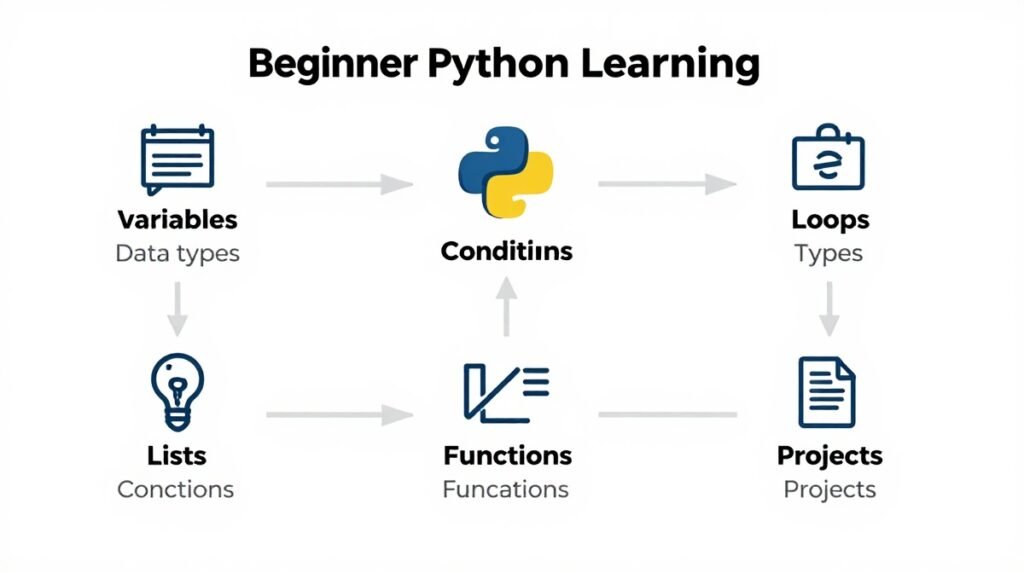
As you progress, you will learn how to make decisions, repeat tasks, organise information and build small applications.
Learn from home at your own pace
Online courses generally offer one or more of the following learning formats:
- Recorded classes: Watch lessons whenever you have time and repeat them when needed.
- Live online classes: Learn according to a schedule and ask questions during sessions.
- Mentor-led training: Receive help with errors, assignments and coding concepts.
- Self-paced platforms: Complete lessons and quizzes at a speed that suits you.
- Project-based programmes: Apply what you learn by creating working projects.
Before enrolling, check which format is actually included. A course advertised as online training may provide only recorded videos, without live support or personal feedback.
Explore different career directions
Python is used in several technical fields, including:
- Software and application development
- Data analysis
- Artificial intelligence and machine learning
- Automation and scripting
- Web development
- Testing and quality assurance
A beginner course does not automatically qualify you for these jobs. It provides the foundation you can build on through further study, practical projects and relevant experience.
Is Python suitable for beginners? Yes. Python is a suitable first programming language because its syntax is relatively readable and it supports many practical applications. Beginners can start with basic coding before moving to specialised areas.
2. How to Choose the Best Python Course for Beginners Online
The right course should teach you how to write and understand code, not simply help you finish videos. Compare the course structure, practice opportunities, instructor support and total cost before making a decision.
Check the syllabus before paying
A good beginner syllabus should progress from basic concepts to small, practical programmes.
| Topic | What you should learn |
| Introduction to Python | What Python is and how to run a programme |
| Variables and data types | Store text, numbers and other values |
| Operators | Perform calculations and comparisons |
| Conditional statements | Use if, elif and else |
| Loops | Repeat tasks with for and while |
| Data structures | Work with lists, tuples, dictionaries and sets |
| Functions | Organise reusable blocks of code |
| File handling | Read from and write to files |
| Error handling | Understand and manage common errors |
| Modules | Reuse functionality from Python libraries |
| Projects | Combine concepts to solve simple problems |
Some courses may introduce object-oriented programming, databases or external libraries. These can be useful, but a complete beginner should first understand variables, conditions, loops, functions and basic data structures. You can check external resources like the W3Schools Python Tutorial for additional explanations.
Look for hands-on coding practice
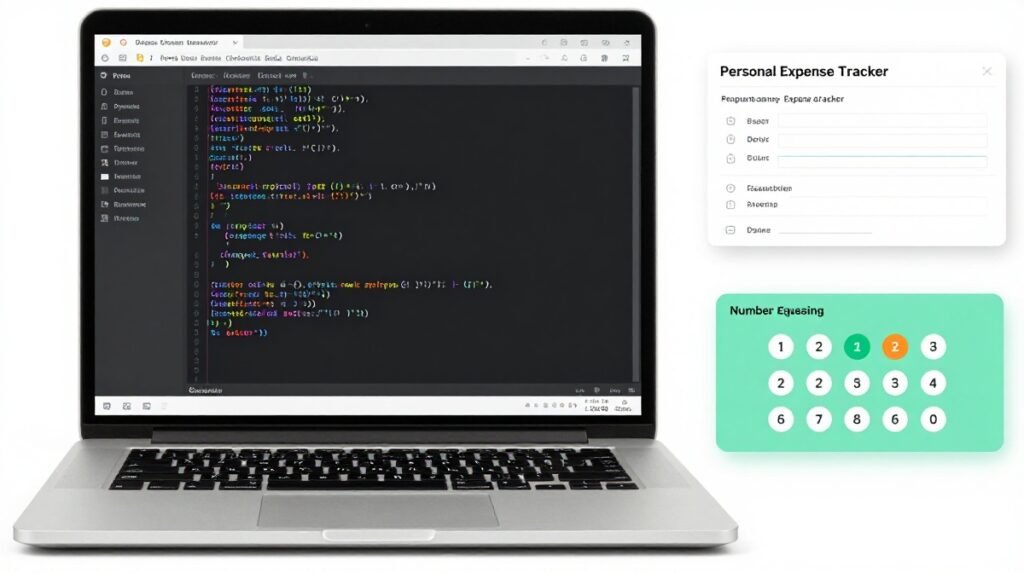
Watching an instructor write code is not the same as writing it yourself. Choose a course that includes exercises after each topic.
For example, after learning conditional statements, try writing a programme that checks whether a number is positive, negative or zero. After learning loops, create a multiplication table generator.
Useful course features include:
- Short coding exercises
- Topic-wise assignments
- Practice quizzes
- Debugging activities
- Mini-projects
- Feedback on submitted work
- A final project you can demonstrate
If a course does not offer assignments, you can still practise independently, but you will need to plan your own exercises and check your solutions.
Compare live classes and recorded lessons
Neither format is automatically better. Your choice depends on how you prefer to learn.
| Feature | Recorded course | Live online course |
| Flexible timing | Usually high | Depends on the timetable |
| Ability to replay lessons | Usually available | Depends on recordings |
| Immediate questions | Often limited | Usually possible during class |
| Learning pace | Self-controlled | Guided by the instructor |
| Personal feedback | Depends on the platform | Depends on class size and support |
If you are new to programming and often need help understanding errors, live classes or mentor support may be useful. If your schedule changes frequently, recorded lessons may be more convenient.
Before paying for live training, ask whether classes are recorded, how doubts are resolved and whether missed sessions can be made up.
Verify the certificate and course provider
Many online programmes provide certificates after completion. However, certificates differ in their purpose and recognition.
Check these details before enrolling:
- Who issues the certificate?
- Is it a course-completion certificate or an independently assessed credential?
- Is there an examination or practical assessment?
- Are the course fee and certificate fee separate?
- Can you see the full syllabus and instructor details before payment?
A certificate can document your learning, but it does not guarantee employment. Employers may also look for coding ability, problem-solving skills, project experience and communication.
Avoid enrolling solely because an advertisement promises a guaranteed job or unusually high salary after a short course. You can research broader career expectations via the LinkedIn Learning Blog.
3. What Will You Learn in a Beginner Python Course?
The best Python course for beginners should provide a strong foundation before introducing advanced subjects. Here are the essential topics and examples you should understand.
Python basics and variables
Variables allow you to store information for later use.
student_name = “Meena”
age = 20
course = “Python”
print(student_name)
print(age)
print(course)
You should learn how to create variables, work with strings and numbers, accept user input and display results.
A useful practice exercise is to create a programme that asks for a student’s name and three subject marks, then displays the total.
Conditional statements and loops
Conditional statements allow programmes to make decisions.
mark = 75
if mark >= 40:
print(“Pass”)
else:
print(“Fail”)
Loops help you repeat instructions without writing the same code several times. These concepts are essential for building calculators, quiz programmes and simple data-processing tools.
Lists, dictionaries and functions
Lists store collections of items, while dictionaries store information as key-value pairs. Functions allow you to organise code into reusable sections.
For example, you could create a list of product prices and calculate their total. Later, you could turn that calculation into a function that works with different lists.
These skills become particularly useful when your programmes need to handle multiple records instead of one value at a time.
File handling and error management
Many useful programmes need to save or retrieve information. File handling teaches you how to read and write data, while error handling helps you respond to unexpected situations.
For example, a student record programme might save names and marks in a file so the information remains available after the programme closes.
You should also learn how to interpret common error messages. Errors are a normal part of programming, and understanding them is an important skill.
Introduction to libraries and specialised topics
After mastering the basics, you can explore libraries that support particular tasks.
- Data analysis: Learn the basics of libraries such as pandas and Matplotlib.
- Web development: Explore frameworks such as Flask or Django after learning core Python.
- Automation: Practise automating repetitive tasks with suitable libraries.
- Artificial intelligence: Build your Python foundation before studying machine learning concepts.
You do not need to learn every field at once. Choose a direction after completing a few small projects and discovering which type of work interests you.
4. Practical Python Projects Every Beginner Should Build
Projects help you turn theory into practical skills. They also give you examples to discuss in interviews and display in a portfolio.
You do not need to create a complicated application immediately. Start with a small problem, complete it and gradually add features.
Project 1: Student marks calculator
Create a programme that accepts marks for several subjects and calculates the total, average and result.
Skills practised:
- Variables and input
- Arithmetic operators
- Conditional statements
- Basic validation
For an improvement, add grade categories and check that entered marks fall within the permitted range.
Project 2: Personal expense tracker
Build a simple tool that records daily expenses and calculates how much you spend.
Skills practised:
- Lists and dictionaries
- Loops and functions
- Calculations
- File handling
You could extend the project to group expenses into categories such as food, transport, education and shopping.
Project 3: Number guessing game
Write a programme that chooses a number and asks the user to guess it. The programme should indicate whether the guess is too high or too low.
Skills practised:
- Conditional statements
- Loops
- User input
- Random number generation
This is a useful early project because it helps you practise several core concepts in a simple, interactive format.
Project 4: Product inventory manager
Create a basic programme to record product names, quantities and prices.
Skills practised:
- Dictionaries and lists
- Functions
- Updating records
- Calculating inventory value
This project can help you understand how programming supports everyday business activities.
Project 5: Simple data analysis report
Once you understand Python basics, work with a small sales or expense dataset. Calculate totals, identify the highest-selling product and display a simple chart.
You can later explore pandas for data manipulation and Matplotlib for visualisation.
Do not claim that a project uses advanced data analysis if it only performs a few basic calculations. Explain exactly what your code does, what problem it solves and what you learned while building it.
Portfolio tip: Save your projects in clearly named folders, write a short README explaining how each programme works and, when appropriate, publish your code on GitHub. Make sure you understand the code before presenting it as your own work. You can check community standards via GitHub Guides.
5. Online Python Course Fees, Duration and Learning Support
Course fees and durations vary between providers. Rather than relying on a general advertised price, compare the actual features included in the programme.
What affects the course fee?
The cost may depend on:
- Total number of teaching hours
- Live classes versus recorded lessons
- Instructor or mentor access
- Assignment review and project feedback
- Certificate or examination fees
- Placement assistance, if offered
- Access duration and learning materials
A lower-priced course may be suitable if it offers a clear syllabus and enough practice. A more expensive course may be worthwhile if it provides individual guidance and structured project reviews. Compare the actual value rather than assuming that price determines quality.
How long does it take to learn Python?
The time required depends on your starting point, practice schedule and learning goals.
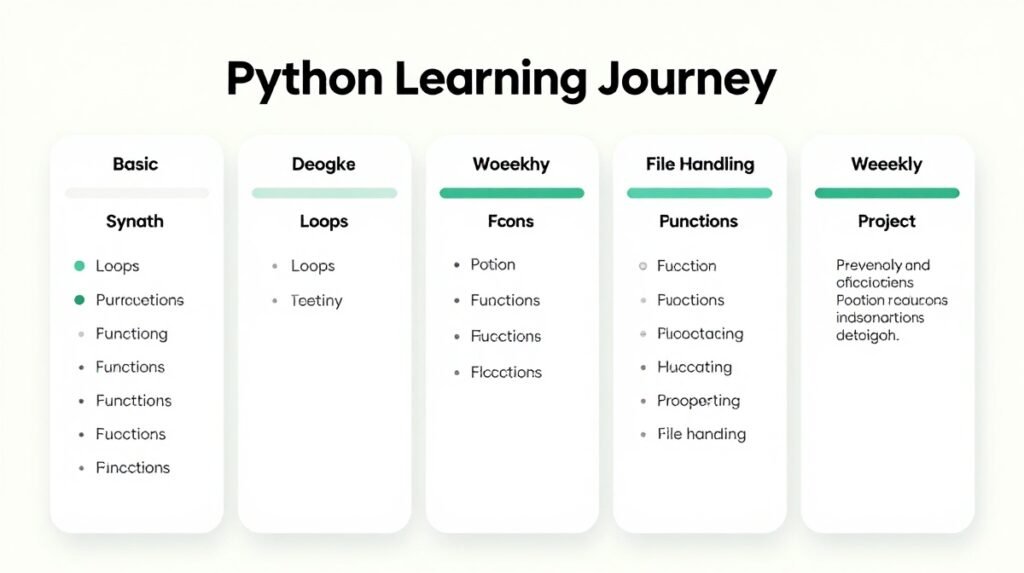
| Learning stage | Suggested study focus |
| Weeks 1–2 | Syntax, variables, input and data types |
| Weeks 3–4 | Conditions, loops and basic exercises |
| Weeks 5–6 | Lists, dictionaries and functions |
| Weeks 7–8 | File handling, errors and mini-projects |
| Weeks 9–12 | More practice and a portfolio project |
This is an illustrative plan, not a guaranteed completion timeline. You may need more time for difficult concepts, especially if this is your first experience with programming.
Consistency matters more than rushing through lessons. Even 30–60 minutes of focused practice on most days can help you make steady progress.
What support should a course provide?
Before enrolling, check whether you can contact the instructor, submit assignments, receive feedback and access lessons after the course ends.
If you are comparing the best Python course for beginners online in Koodal Nagar, Madurai, you can attend an online demo class from home and ask about the course’s teaching format, schedule and support arrangements. Your physical location does not necessarily limit your choice to providers based in your neighbourhood.
Do not assume that a provider offers a local classroom, a particular fee or placement assistance unless those details have been confirmed directly. For local listings, you can consult platforms like Justdial Madurai.
6. Common Mistakes Beginners Should Avoid
Many new learners struggle because they focus on finishing the course instead of developing the ability to solve problems independently.
Watching lessons without coding
It is tempting to watch several videos in one sitting. However, programming requires active practice.
After each lesson, close the example and try to recreate the code from memory. Change a few values and see what happens. This will help you understand the logic rather than simply recognise it.
Copying code without understanding it
Copying an example can help you get started, but you should understand each important line.
Ask yourself:
- What does this variable store?
- Why is this condition necessary?
- What happens if the user enters a different value?
- Can I solve the same problem another way?
If you cannot explain your code, return to the relevant lesson and practise with a smaller example.
Moving to advanced topics too early
Artificial intelligence and machine learning are popular areas, but beginners often benefit from mastering core Python first.
Learn variables, conditions, loops, data structures and functions before moving to advanced libraries. A strong foundation makes later subjects easier to understand.
Ignoring error messages
An error does not mean you are bad at programming. It is information about something your programme cannot execute as written.
Read the error message carefully, check the line it identifies and test one change at a time. Keeping a notebook of errors and their solutions can help you recognise recurring problems.
Expecting a job from a certificate alone
A certificate may support your resume, but it cannot replace practical ability. Build projects, practise explaining your solutions and learn the tools relevant to your chosen field.
If your goal is employment, review entry-level job descriptions and identify the skills employers actually request. Use that information to decide what to study after the beginner course.
Frequently Asked Questions
1. Which is the best Python course for beginners online?
The best course is one that starts with programming fundamentals, includes regular coding exercises, provides clear explanations and helps you complete practical projects. Compare the syllabus, instructor support, course format, certificate details and total cost before choosing a provider.
2. Can I learn Python online without any programming experience?
Yes. You can begin without previous programming experience. Start with basic syntax, variables, data types and simple programs. Practise regularly and move to more complex topics only after you understand the fundamentals.
3. How much does an online Python course cost in Madurai?
There is no single standard fee. Prices depend on the provider, teaching hours, live support, assignments, projects and certification. Check the current fee directly with each provider and confirm whether taxes, learning materials or certificate charges are included.
4. Will an online Python certificate help me get a job?
A certificate can show that you completed a course, but employment depends on several factors, including practical coding skills, projects, problem-solving ability and the requirements of the role. Use the course to build demonstrable skills rather than relying on the certificate alone.
5. Can college students learn Python while studying?
Yes. A flexible online course can fit around college commitments. Start with a manageable routine, such as 30–60 minutes of coding practice on most days, and use weekends for assignments or projects. Choose a schedule you can maintain consistently.
Conclusion
Finding the best Python course for beginners online in Koodal Nagar, Madurai, starts with understanding what you want to achieve. A good course should teach core programming concepts clearly, give you opportunities to write code, provide useful feedback and help you complete practical projects.
Before paying, compare the syllabus, course format, instructor support, certificate conditions and total fee. Start with Python fundamentals, practise consistently and build small projects such as a marks calculator, expense tracker or inventory manager.
If you are ready to begin, shortlist two or three online courses, review their syllabuses and attend a demo class when available. Choose the option that fits your schedule and learning needs—not simply the one with the most impressive advertisement.
Your next step: Set aside a short daily practice session, write your first Python programme and gradually build a portfolio that demonstrates what you can do.