Python has become one of the most widely used and versatile programming languages in the tech industry today. From web development and automation to data analysis and artificial intelligence, Python powers millions of applications globally. For students, fresh graduates, and career changers living in Madurai, enrolling in a Job Oriented Python Course in Koodalnagar offers a structured, practical way to build industry-ready skills and launch a career in software development.
Whether you are completely new to programming or looking to upgrade your technical foundation, finding the right practical training program can make all the difference. This comprehensive guide covers everything you need to know about pursuing a Job Oriented Python Course in Koodalnagar, including fundamental core concepts, real-world portfolio projects, essential tools, interview preparation strategies, and a step-by-step 12-week learning roadmap.
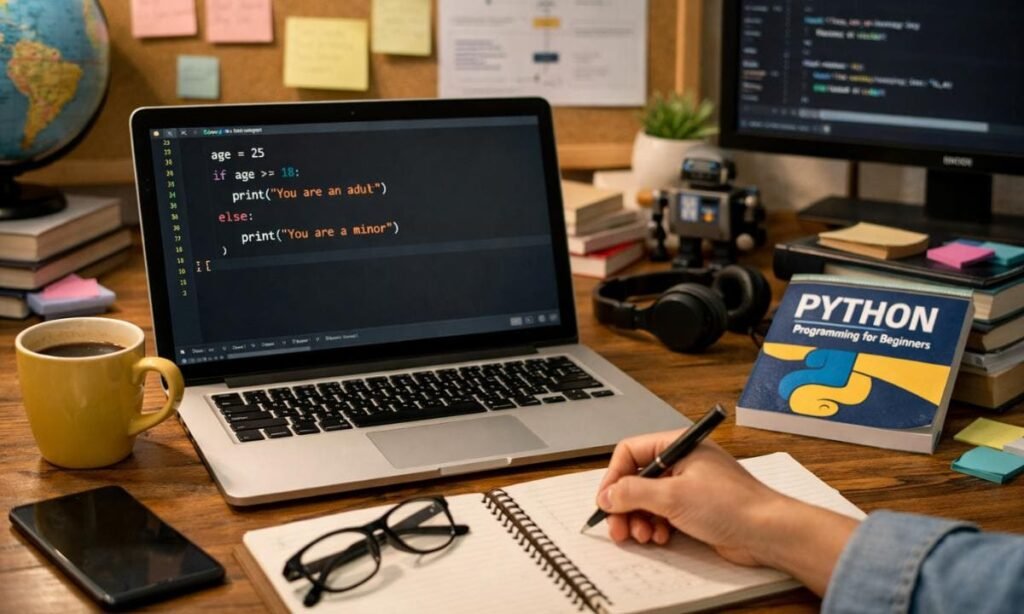
Why Choose a Job Oriented Python Course in Koodalnagar?
Choosing the right location and training model is crucial for effective skill building. A job-oriented program focuses specifically on skills that software companies actively look for when hiring junior developers and technical trainees.
Learn Python from the Fundamentals
Unlike generic academic courses that focus primarily on theory, a career-focused curriculum ensures you write real code from day one. Beginners learn essential syntax, data types, control flow structures, and core programming logic. By building strong fundamentals, you develop the confidence to solve complex algorithmic problems efficiently. For official documentation and language standards, the Python Software Foundation offers authoritative guides that complement your daily practical exercises.
Practical Hands-On Learning
Theory alone is not enough to secure a software development role. A practical course emphasizes writing clean code, debugging errors independently, and working on real-world assignments. Active coding practice helps solidify core concepts and prepares you for real-time technical tasks during job interviews.
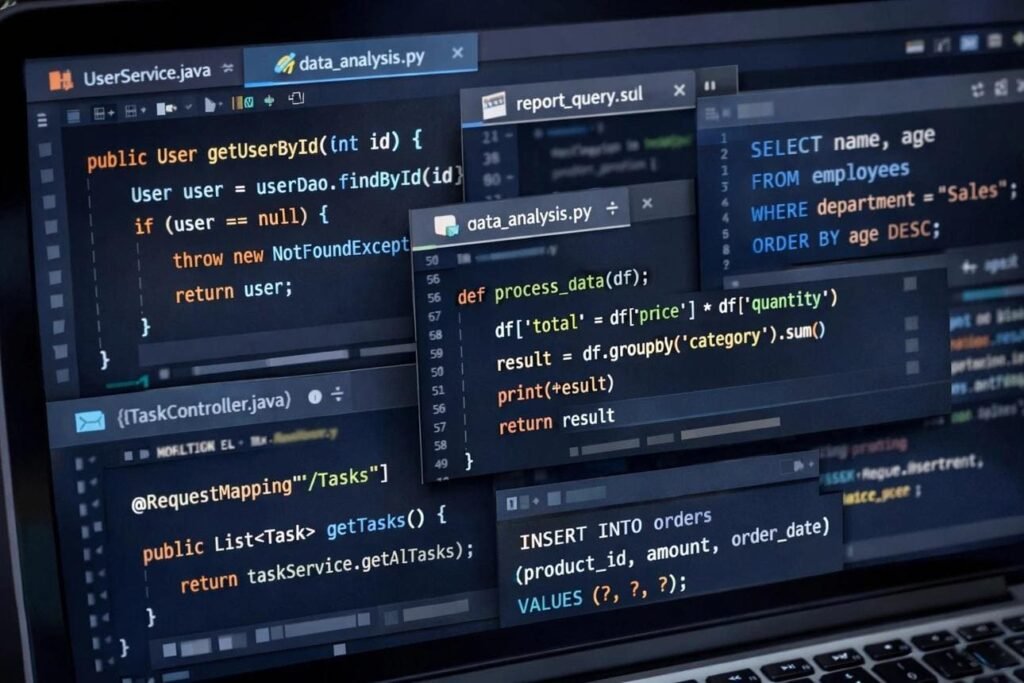
Guided Career Preparation and Mentorship
A dedicated Job Oriented Python Course in Koodalnagar gives you access to structured guidance from experienced instructors. Mentors assist you in building resume-worthy projects, establishing a clean GitHub repository, and practicing coding problems under realistic interview conditions.
Core Curriculum: What You Should Learn in a Python Course
A well-structured Python course syllabus should bridge the gap between basic syntax and professional development practices. Below is an overview of key topics covered in a practical Python training curriculum.
1. Python Programming Fundamentals
- Variables & Data Types: Integers, floats, strings, booleans, lists, tuples, dictionaries, and sets.
- Control Flow: if-else conditional logic, for loops, while loops, and iteration patterns.
- Functions & Modules: Defining re-usable functions, parameter passing, return statements, and modular code architecture.
- String Manipulation: Methods, formatting, parsing text data, and regular expressions.
2. Object-Oriented Programming (OOP) Concepts
Object-Oriented Programming is essential for writing scalable, professional-grade applications:
- Classes and Objects
- Inheritance and Method Overriding
- Encapsulation and Data Hiding
- Polymorphism and Abstraction
3. File Handling & Exception Management
- Reading and writing to text, CSV, and JSON files.
- Error handling using try-except-finally blocks to make applications robust.
4. Database Integration & SQL Basics
Modern applications depend on backend database interaction. Learning database fundamentals ensures comprehensive backend developer preparation:
- Writing basic SQL queries (SELECT, INSERT, UPDATE, DELETE).
- Connecting Python scripts to relational databases like SQLite or MySQL.
- Performing CRUD (Create, Read, Update, Delete) operations using Python database drivers.
5. Essential Development Tools (Git & GitHub)
Understanding version control systems like Git is a non-negotiable requirement for software engineering jobs. Candidates should learn how to stage changes, make meaningful commits, manage branches, and push code repositories to GitHub to showcase their work to employers. You can read more about standard repository management practices on the GitHub Docs portal.

Hands-On Python Projects to Build a Job-Ready Portfolio
Employers value practical experience over static certification. Completing portfolio-ready projects demonstrates your ability to apply Python syntax to solve actual business problems.
Project 1: Student Record & Management System
- Key Focus: Object-Oriented Programming, file handling, basic CRUD operations.
- Overview: Build a command-line interface (CLI) application that allows administrators to add, update, search, and delete student academic records stored locally in JSON or CSV files.
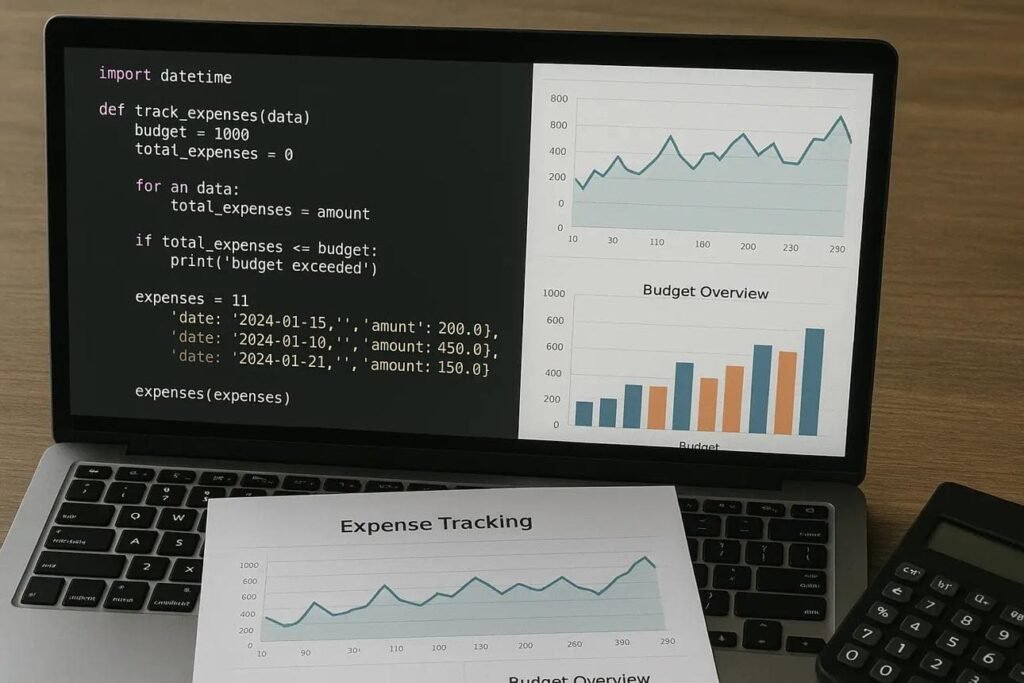
Project 2: Personal Expense & Budget Tracker
- Key Focus: Python logic, module organization, SQLite database integration.
- Overview: Create an interactive application to record income and expenses, calculate monthly budgets, categorize transactions, and generate basic summary reports saved directly to a database.
Project 3: Automated Web Scraper or Task Automation Script
- Key Focus: External libraries (BeautifulSoup or Requests), automated task scheduling.
- Overview: Build a script that collects real-time information—such as tech job listings or news headlines—from public websites, cleans the structured data, and exports it to formatted spreadsheets automatically. Make sure to abide by web standards as defined by the World Wide Web Consortium (W3C).
Python Technical Interview Preparation Strategies
Completing your training curriculum is the first step; mastering technical interview rounds is what ultimately secures job offers. A targeted Job Oriented Python Course in Koodalnagar incorporates explicit interview training throughout the learning program.
Practise Common Python Interview Topics
Prepare thoroughly for common technical questions focusing on:
- Differences between mutable and immutable data structures (e.g., Lists vs. Tuples).
- Memory management, garbage collection, and variable references in Python.
- Functional programming concepts such as list comprehensions, lambda functions, map, and filter.
- Deep copy versus shallow copy behavior in complex data structures.
Solve Coding Problems Regularly
Consistent practice on competitive coding platforms like LeetCode helps build algorithmic problem-solving speed. Focus on array manipulation, string processing, dictionary mappings, and simple recursion techniques.
Build a Professional Resume and Tech Portfolio
Present your technical skills effectively by following these standards:
- Highlight 2–3 major practical projects with direct GitHub links.
- Detail the exact tech stack used (e.g., Python 3, SQLite, Git, Requests).
- Format your resume cleanly without unnecessary jargon, focusing on actual coding skills learned during your Job Oriented Python Course in Koodalnagar.
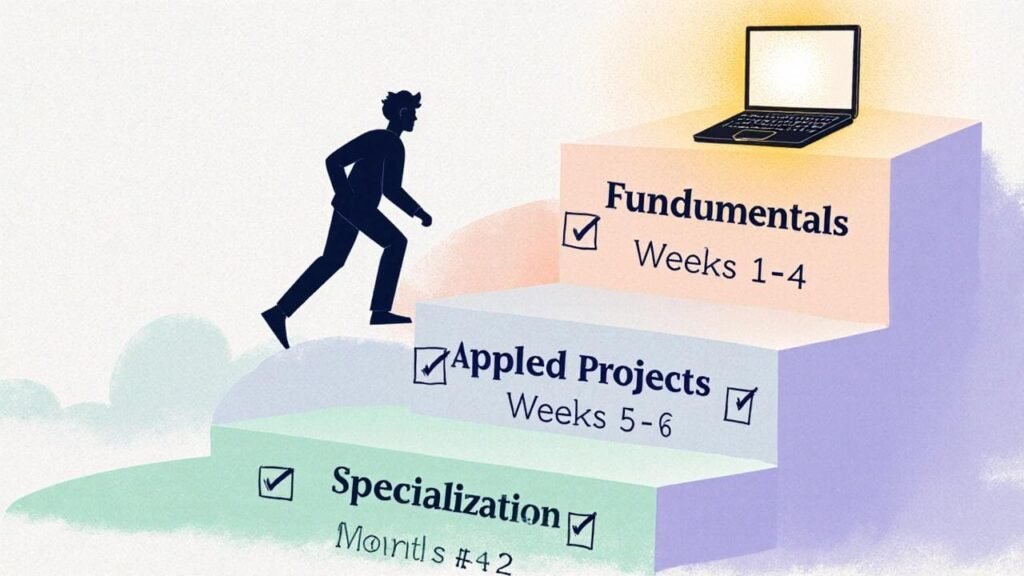
Structured 12-Week Python Learning Roadmap
To maximize your training productivity, follow a well-organized schedule that balances conceptual learning with practical build exercises.
| Week Range | Core Focus Area | Deliverables & Milestones |
| Weeks 1–3 | Python Basics & Syntax | Master variables, data types, loops, conditionals, and functions. |
| Weeks 4–5 | Advanced Logic & OOP | Build modules, implement Object-Oriented concepts, and handle file I/O. |
| Weeks 6–7 | Databases & SQL Basics | Integrate Python applications with SQLite/MySQL databases for persistent storage. |
| Weeks 8–9 | Portfolio Project Development | Design, code, and test two standalone portfolio applications using Git version control. |
| Weeks 10–12 | Technical Interview Prep | Practice algorithmic problem solving, refine your resume, and conduct mock interviews. |
Frequently Asked Questions (FAQs)
1. Is prior coding experience required to enroll in a Job Oriented Python Course in Koodalnagar?
No, prior programming experience is not strictly required. Python is renowned for its clean, human-readable syntax, making it the ideal language for absolute beginners starting their software development journey.
2. What job roles can I apply for after finishing a Python training course?
After mastering Python fundamentals, database basics, and version control, candidates can apply for beginner and entry-level positions such as:
- Junior Python Developer
- Software Trainee / Technical Apprentice
- QA Automation Support Engineer
- Data Analyst Associate (with additional data tools)
3. How long does it take to become job-ready in Python?
With consistent daily practice (around 2 to 3 hours), a beginner can master essential Python programming concepts, build functional projects, and prepare for entry-level interviews within 12 to 16 weeks.
Conclusion
Enrolling in a structured Job Oriented Python Course in Koodalnagar provides a clear path for aspiring developers to gain in-demand programming skills, build real-world project portfolios, and prepare effectively for technical software job interviews. By focusing on practical problem-solving, clean coding practices, and core computer science fundamentals, you build a solid foundation for a sustainable career in the technology industry.
To ensure your web portfolio projects follow search engine standards for visibility, review guidelines directly from Google Search Central as you continue deploying your applications.