Looking for Abacus Classes in Koodalnagar, Madurai?
Does your child take a long time to solve simple maths problems? Do they understand numbers but struggle to calculate quickly or feel nervous when answering maths questions? Many parents look for practical ways to help their children become more comfortable with numbers.
One learning method worth exploring is abacus training. It introduces children to numbers through a physical counting tool and gradually encourages them to perform calculations mentally. With regular practice, children can develop familiarity with number patterns, calculation techniques, and step-by-step problem-solving.
For parents exploring IPL – Abacus Classes Koodalnagar Madurai, understanding how abacus education works, what children learn at different stages, and how to choose a suitable training programme can make the decision easier.
In this guide, we will explain the basics of abacus learning, its potential benefits, how to evaluate an abacus training institute, and what parents should consider before enrolling their children.

1. What Is Abacus Training, and How Does It Help Children Learn Maths?
An abacus is a counting tool made with beads arranged on rods or wires. Moving the beads represents numbers and mathematical operations. Children learn to use these movements to understand quantities and perform calculations.
Unlike learning arithmetic only through written exercises, abacus training gives children a visual and hands-on way to explore numbers. Studies indexed in the National Center for Biotechnology Information (NCBI) demonstrate that visual and tactile learning tools actively support spatial reasoning and working memory in early childhood.
How does abacus learning work?
A structured abacus programme commonly introduces the following stages:
- Number recognition: Children become familiar with numbers, quantities, and the relationship between them.
- Abacus familiarisation: They learn how the beads represent different numerical values.
- Basic calculations: They practise addition and subtraction using the abacus.
- More advanced operations: Depending on the curriculum, they progress to multiplication, division, and more complex calculations.
- Mental arithmetic: With practice, children learn to visualise bead positions and perform calculations without physically moving the beads.
The exact sequence and pace vary between training programmes. Children should have enough time to understand each stage before moving forward.
Is abacus suitable for beginners?
Yes. Many abacus programmes are designed for beginners, including children with little previous experience using an abacus.
Parents should look for a programme that begins with foundational concepts, provides clear demonstrations, and allows children to practise at a comfortable pace.
The objective is not simply to finish calculations quickly. It is to develop a reliable understanding of numbers and the methods used to calculate them. If your child is also starting to explore digital literacy, feel free to learn more about our foundational computer courses for beginners to support their broader skill development.
2. Benefits of Joining IPL Abacus Classes in Koodalnagar, Madurai
Parents often explore abacus training because they want their children to approach mathematics with greater confidence. The benefits depend on the child’s interest, teaching quality, practice routine, and individual learning needs.
When considering IPL – Abacus Classes Koodalnagar Madurai, these are some of the learning outcomes worth discussing with the trainer.
A. Better familiarity with numbers
Using beads helps children see how numbers can be represented and manipulated.
For example, a child learning to calculate $23 + 15$ can represent 23 on the abacus, add 15, and observe the resulting value of 38.
This concrete process can make numerical operations easier to understand, particularly for children who benefit from visual learning.
B. Improved calculation fluency
Regular practice may help children become more comfortable with addition, subtraction, and other operations covered by their course.
Calculation fluency means solving familiar problems accurately and efficiently. Speed can develop over time, but accuracy and understanding should come first.
C. Practice in sustained attention
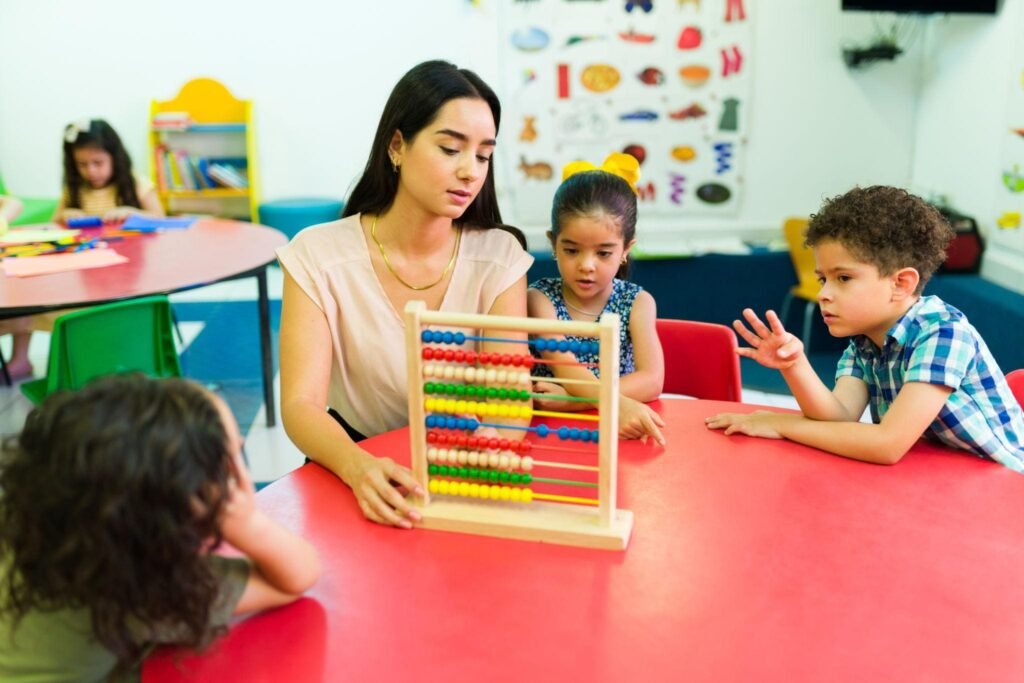
During an abacus exercise, children need to follow instructions, track bead positions, and complete calculations carefully.
These activities provide opportunities to practise maintaining attention on a task. However, improvements in attention during abacus practice do not automatically mean that every aspect of concentration will improve in other situations.
D. Greater confidence in mathematics
Children may feel more confident when they understand how to solve a problem rather than simply memorising an answer.
Small, achievable exercises can help them recognise their progress. Encouragement from parents and trainers can also make learning feel more enjoyable.
E. A structured learning routine
A regular abacus class and a short home-practice routine can help children build consistency.
For example, a child might practise for 10–15 minutes at home on most days, provided the duration suits their age, attention span, and trainer’s recommendations.
The goal is steady improvement without making practice feel like a punishment. These foundational routines help children succeed when following national educational frameworks such as the NCERT curriculum guidelines.
3. How to Choose the Best Abacus Training Institute in Koodalnagar, Madurai
Searching for IPL – Best Abacus Training Institute Koodalnagar Madurai is a starting point, but parents should evaluate the actual learning experience before enrolling their children.
A suitable institute should offer clear instruction, an appropriate curriculum, and a learning environment in which children feel comfortable asking questions. You can review our background and educational philosophy on the About IPL Technologies page.
Check the course structure and levels
Ask whether the programme is divided into beginner, intermediate, and advanced stages.
A level-based curriculum can help parents understand what their child will learn and how progress will be assessed.
Useful questions include:
- What concepts are taught at the beginner level?
- How are children assessed before moving to the next level?
- Does the programme cover addition, subtraction, multiplication, and division?
- How is mental arithmetic introduced?
- What happens if a child needs extra practice?
The answers should explain the learning process clearly rather than promising instant results.

Understand the trainer’s teaching approach
A good trainer should be able to explain calculations step by step and identify where a child is having difficulty.
Ask whether students receive demonstrations, guided practice, individual feedback, and opportunities to correct mistakes.
It is also worth finding out how the trainer supports children who learn at different speeds.
Ask about class size and practice opportunities
Class size can influence how much individual attention a child receives. Ask how the trainer monitors each student’s progress and whether children have enough time to practise during class.
Parents should also understand whether home exercises are provided and how doubts can be clarified between sessions.
Review the fee structure and schedule
Before enrolling, confirm the total course fee and what it includes.
| What to check | Why it matters |
| Course duration | Helps you plan around school and other activities |
| Class timings | Makes regular attendance easier |
| Learning materials | Clarifies whether an abacus and workbooks are included |
| Assessment method | Explains how progress is monitored |
| Certificate policy | Clarifies the requirements for receiving a certificate |
| Additional charges | Helps avoid unexpected expenses |
For families in Koodalnagar and nearby parts of Madurai, convenient timings and travel arrangements may also influence the decision.
Ask for a demonstration or trial class
If available, a demonstration class can help you understand the trainer’s teaching style before committing to a longer programme.
Observe whether the child can follow the explanation, gets opportunities to participate, and feels comfortable with the activities.
Practical tip: Compare institutes based on teaching quality, course structure, accessibility, and suitability for your child rather than choosing on price alone.

4. Understanding the Abacus Learning Journey: Beginner to Advanced
Children do not all learn at the same pace. Some quickly understand bead movements but need more practice with mental calculations. Others may need additional time to become comfortable with the basic concepts.
A level-based approach can help organise learning into manageable stages.
Beginner level: Building a strong foundation
At this stage, children generally learn:
- Basic number recognition and numerical values.
- The arrangement of beads on the abacus.
- How to represent numbers.
- Simple addition and subtraction.
- Correct bead movements and calculation procedures.
Parents should encourage accuracy rather than rushing their child to complete exercises.
Intermediate level: Developing calculation skills
After understanding the fundamentals, students may progress to more challenging addition and subtraction problems.
Depending on the curriculum, they may also begin learning multiplication, division, and more complex number combinations.
At this stage, regular revision is important. Children should understand the steps involved rather than memorising movements without knowing what they represent.
Advanced level: Practising mental arithmetic
As students gain familiarity with the abacus, some programmes introduce mental visualisation.
Children practise imagining the bead positions and using those mental representations to solve calculations.
This stage requires patience. Mental arithmetic should develop from a secure understanding of physical abacus operations.
How can parents monitor progress?
Instead of asking only whether the child is calculating faster, look for several indicators:
- Can the child explain the steps used to solve a problem?
- Are calculations becoming more accurate?
- Can the child complete familiar exercises with less assistance?
- Does the child remember previously learned concepts?
- Is the child willing to attempt new problems?
These observations provide a more balanced picture of learning progress.
5. How Parents Can Support Abacus Practice at Home
An abacus class introduces techniques, but regular revision helps children become familiar with them.
Parents do not need to be mathematics experts to support this process. A calm environment, encouragement, and a consistent routine can make home practice more manageable.
Create a short, regular practice schedule
Choose a time when the child is not too tired or distracted.
For example, a simple routine might look like this:
| Practice activity | Suggested time |
| Revise previously learned concepts | 3 minutes |
| Practise exercises assigned by the trainer | 5–7 minutes |
| Review mistakes together | 2–3 minutes |
Adjust the duration to the child’s age, workload, and comfort level. These timings are examples, not a compulsory schedule.
Encourage accuracy before speed
If a child makes a mistake, ask them to explain how they reached the answer.
Help them identify the step that caused the problem instead of immediately giving the correct answer.
Once the method becomes clear, repeated practice can help improve efficiency.

Make practice enjoyable
Simple activities can reinforce number familiarity without replacing the trainer’s lessons.
For example:
- Ask the child to add small quantities during everyday activities.
- Let them explain a calculation they learned that day.
- Use short practice challenges suited to their current level.
- Celebrate consistent effort and improvement.
Avoid comparing children with siblings, classmates, or other students. Their progress may differ depending on experience, confidence, and practice time.
Avoid common mistakes
Parents can support better learning by avoiding these habits:
- Expecting instant results: New skills need time and repetition.
- Overloading the child: Excessive practice may lead to frustration.
- Focusing only on speed: Understanding and accuracy are equally important.
- Skipping revision: Previously learned concepts may need regular reinforcement.
- Using pressure as motivation: A positive learning experience is more sustainable than constant comparison.
The best practice routine is one that the child can follow consistently without unnecessary stress.
6. Is Abacus Training Right for Your Child?
Abacus classes may be worth considering if your child enjoys hands-on activities, wants additional arithmetic practice, or benefits from structured number exercises.
However, abacus training is not the only way to develop mathematical skills. Schoolwork, number games, everyday problem-solving, and guided arithmetic practice can also support learning.
Before enrolling, consider your child’s interests and current needs.
When might abacus classes be a good fit?
An abacus programme may suit children who:
- Enjoy working with physical learning tools.
- Need more opportunities to practise arithmetic.
- Prefer step-by-step demonstrations.
- Are interested in mental calculation challenges.
- Respond well to structured lessons and regular feedback.
Children who initially find the activities difficult may still benefit from an introductory lesson, provided the teaching approach suits their needs. Older children who show a strong aptitude for logic through abacus might also be interested in exploring our Junior Python Programming Classes for digital logic building.
What should parents expect?
Abacus training should be viewed as a learning process rather than a guaranteed shortcut to academic success.
Results vary, and the course alone cannot guarantee higher school marks, exceptional memory, or improvements in every cognitive skill.
Parents should look for observable progress in the specific skills being taught and discuss concerns with the trainer when necessary.

Questions to ask before joining IPL Abacus Classes
If you are considering IPL – Abacus Classes Koodalnagar Madurai, ask the institute about:
- The recommended starting age and eligibility requirements.
- Beginner and advanced course options.
- Class duration and weekly schedule.
- Trainer experience and teaching methods.
- Fees, learning materials, and assessments.
- Opportunities to attend a demonstration class.
- How parents can track their child’s progress.
These questions can help you decide whether the programme matches your family’s expectations.
Frequently Asked Questions About IPL Abacus Classes in Koodalnagar, Madurai
1. What is the right age for a child to start abacus classes?
Many programmes accept children from around 4–6 years old, although the suitable starting age depends on the curriculum, the child’s readiness, and the institute’s admission policy. Ask the trainer about age requirements before enrolling.
2. How long does it take to learn abacus?
The learning period depends on the number of levels, class frequency, practice routine, and individual progress. Basic concepts may become familiar relatively quickly, while advanced mental arithmetic generally requires continued practice. Ask the institute for its course structure and progression criteria rather than relying on a fixed completion promise.
3. Does abacus training improve mental maths skills?
Abacus training directly practises arithmetic operations and may improve calculation fluency for the skills being taught. The results depend on instruction and regular practice. It should complement, rather than replace, broader mathematics learning.
4. How do I find the best abacus training institute in Koodalnagar, Madurai?
Compare the curriculum, trainer’s teaching approach, class size, course fees, schedule, learning materials, and progress assessments. If possible, attend a demonstration class and speak with the trainer before making a decision.
5. How can I enquire about IPL Abacus Classes in Koodalnagar, Madurai?
You can contact IPL Technologies in Madurai directly to ask about current abacus course availability, age requirements, class timings, fees, and admission procedures. Confirm the latest details directly with the institute before enrolling.
Conclusion: Take the Next Step Towards Structured Abacus Learning
Abacus training can provide children with a practical way to explore numbers, practise arithmetic, and develop calculation fluency. With clear instruction and consistent practice, children can gradually become more comfortable working through mathematical problems.
If you are exploring IPL – Abacus Classes Koodalnagar Madurai, focus on the factors that matter most: a suitable curriculum, patient instruction, regular practice, and a positive learning environment.
Before choosing a programme, ask about the available levels, class timings, fees, and opportunities for a demonstration session. This will help you understand whether the course is appropriate for your child.
Ready to explore abacus learning? Contact IPL Technologies Koodalnagar Madurai to enquire about the current abacus programme and find out how your child can get started.
Suggested Internal Linking & SEO Checklist
- Internal Links Included:
- External Authoritative Links: