Introduction
Every parent wants their child to feel confident with numbers and build strong learning habits. But basic math like addition, subtraction, multiplication, and division can feel tough when kids start out. Abacus training gives children a hands-on way to work through these sums.
If you’re looking into IPL – Abacus Koodalnagar Madurai, knowing how these classes run will help you make a good choice for your child.
An abacus uses small beads on vertical rods to represent values. Kids move these beads around to solve math problems physically. Over time, they start picturing the frame in their heads to do mental calculations without touching the tool.
This guide walks through how abacus training works in Koodalnagar, Madurai, what kids actually learn, and how to pick the right center.
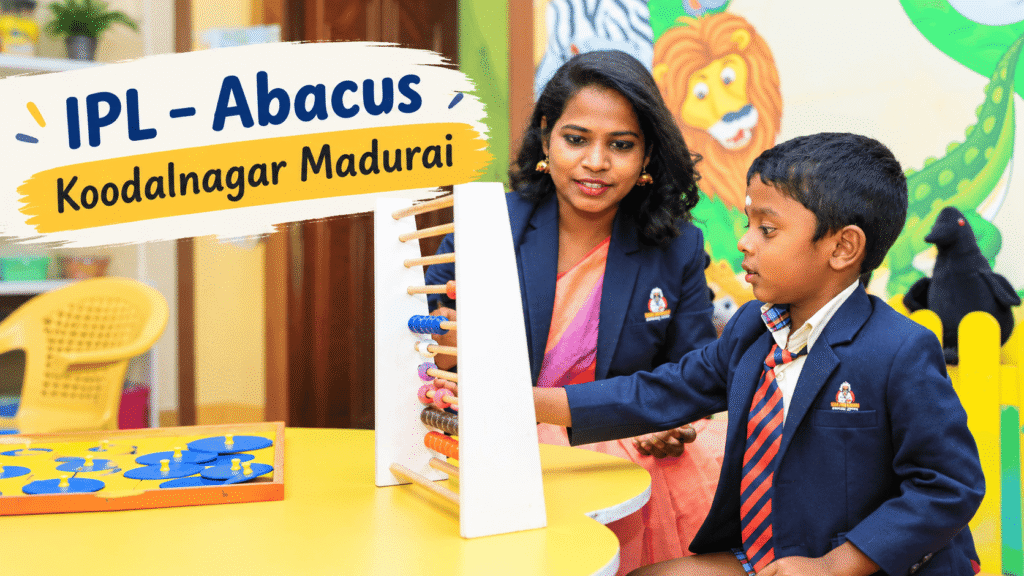
What is abacus training and how does it work?
Abacus training teaches arithmetic through a physical counting frame. It blends hands-on movement with regular memory practice.
The frame holds several vertical rods packed with sliding beads. Each rod stands for a specific place value. Kids slide the beads up and down to build numbers and clear sums.
Eventually, students stop relying on the plastic frame entirely. They visualize the rods moving in their mind, which lets them calculate numbers quickly on the spot.
How do children learn with an abacus?
Learning moves through five clear steps:
- Number recognition: Kids learn which bead positions match specific numbers.
- Basic calculations: They solve addition and subtraction on the physical frame.
- Calculation techniques: They learn methods for handling bigger sums.
- Mental visualisation: They practice moving the beads inside their heads.
- Speed and accuracy: Daily practice helps them double-check their own work faster.
How fast a child moves through these steps depends on the specific course and their personal pace.
Why consider IPL – Abacus Koodalnagar Madurai?
Parents usually look for a local class that offers structure without overwhelming their child.
Evaluating IPL – Abacus Koodalnagar Madurai comes down to checking their setup, location, and teaching style before signing up.
1. A structured way to practise arithmetic
Children need consistent practice to get comfortable with math. Abacus exercises give them a routine that sits right alongside their school homework.
When adding numbers, moving physical beads helps kids see how values change. It feels much more interactive than staring at a plain worksheet.
2. Learning through practical activities
Young kids pick up concepts faster when they use their hands.
Seeing physical beads on a rod makes place values real. Beginners who struggle with written symbols often catch on much faster this way.
3. Regular practice and gradual progress
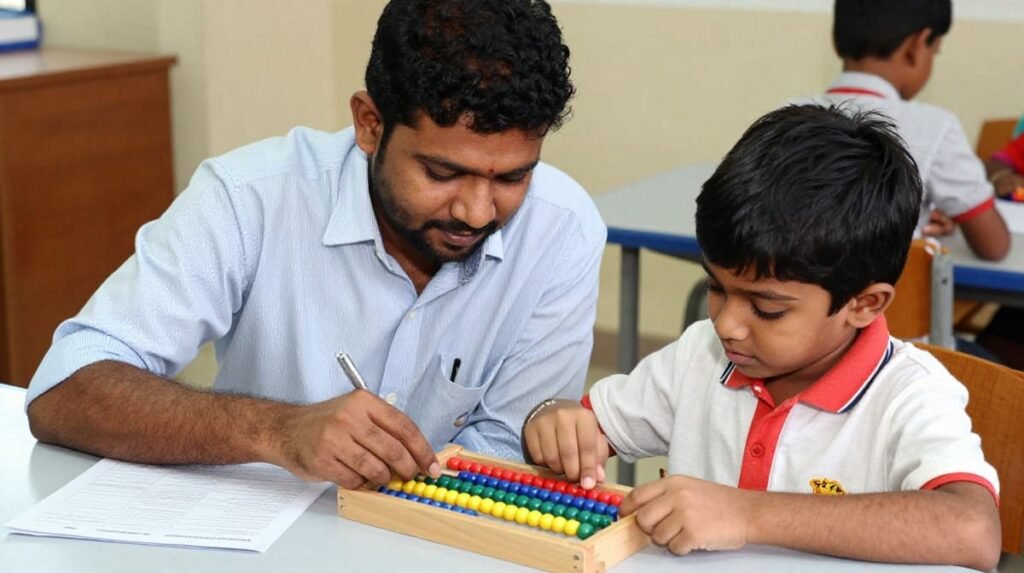
Abacus programs start simple and slowly ramp up the difficulty.
A child starts with single-digit addition before touching larger numbers. Research featured in the Journal of Educational Psychology shows that structured visual manipulation of spatial concepts supports cognitive development in young learners. This step-by-step approach keeps kids from feeling overwhelmed.
4. A convenient learning option for local families
Living in or near Koodalnagar makes travel simple. A nearby center helps you keep up with weekly classes without messing up your family’s routine.
Check the exact location, batch times, fees, and travel routes directly with the center before you sign up.
Note: Always verify course details, fees, class times, and instructor background directly with IPL. Facilities and teaching quality vary from center to center.

Key benefits of abacus classes for children
Abacus practice gives kids a fresh way to approach numbers, though real results depend on instructor quality, steady practice, and the child’s age.
1. Improves arithmetic practice
The main goal of abacus training is building math familiarity.
Doing short exercises daily gives children regular exposure to addition and subtraction.
For example, a child who repeatedly works through sums like 14 + 8 gets comfortable handling multi-step mental math.
Keep in mind that abacus training works alongside school lessons. It does not replace standard math classes.
2. Encourages concentration
Solving problems on a bead frame forces kids to pay attention to details.
They have to track bead movements carefully instead of guessing. These focused sessions build steady study habits that carry over to other subjects.
You can help by setting up a quiet workspace at home and letting your child take short breaks.
3. Develops visual learning skills
An abacus turns abstract numbers into physical shapes. Kids see exactly how sliding a bead changes a value.
Advanced levels train students to picture these bead shifts mentally.
This setup works great for visual learners, though every child processes information differently.
4. Builds confidence through practice
Math anxiety often starts when sums feel too complex. Breaking problems down into bead movements makes math approachable.
A beginner who masters basic addition gains the confidence to tackle harder problems later.
Focusing on effort rather than comparison keeps learning stress-free.

5. Introduces problem-solving habits
Abacus routines teach children to follow clear steps, apply math rules, and check their work.
This structure builds systematic thinking. Kids learn to break down problems step by step instead of rushing to guess an answer.
Abacus practice won’t solve every academic challenge on its own. Kids still need to read word problems, grasp general math concepts, and explain their logic.
6. Encourages independent practice
A basic home routine helps children work through exercises without constant help from parents.
Try this simple 15-minute home routine:
- 5 minutes: Review past exercises.
- 5 minutes: Work on current homework.
- 5 minutes: Check mistakes and offer encouragement.
Keep practice sessions short. Long, forced sessions usually lead to frustration.
What do children learn in an abacus course?
Abacus programs split their curriculum into distinct stages. Level names, requirements, and teaching methods vary by provider.
If you are looking for the Best IPL-Abacus Koodalnagar Madurai setup, ask the center for their specific syllabus instead of relying on general course outlines.
Here is how a standard abacus program moves from start to finish:
| Learning stage | Typical learning activities |
| Beginner | Number recognition and bead movement |
| Basic arithmetic | Simple addition and subtraction |
| Intermediate practice | Larger numbers and multi-step calculations |
| Advanced practice | Complex arithmetic techniques and mental calculations |
| Continued practice | Improving speed, accuracy, and consistency |
Beginner level: Understanding numbers
Students start by matching physical beads to numeric values.
They practice moving beads up and down the rods to build basic numbers.
This stage builds comfort with the tool before any real calculation starts.
Intermediate level: Building calculation skills
Once kids master place values, they move on to multi-digit addition and subtraction.
Depending on the syllabus, some programs introduce multiplication and division here.
The focus stays on understanding how the calculation works rather than memorizing formulas.
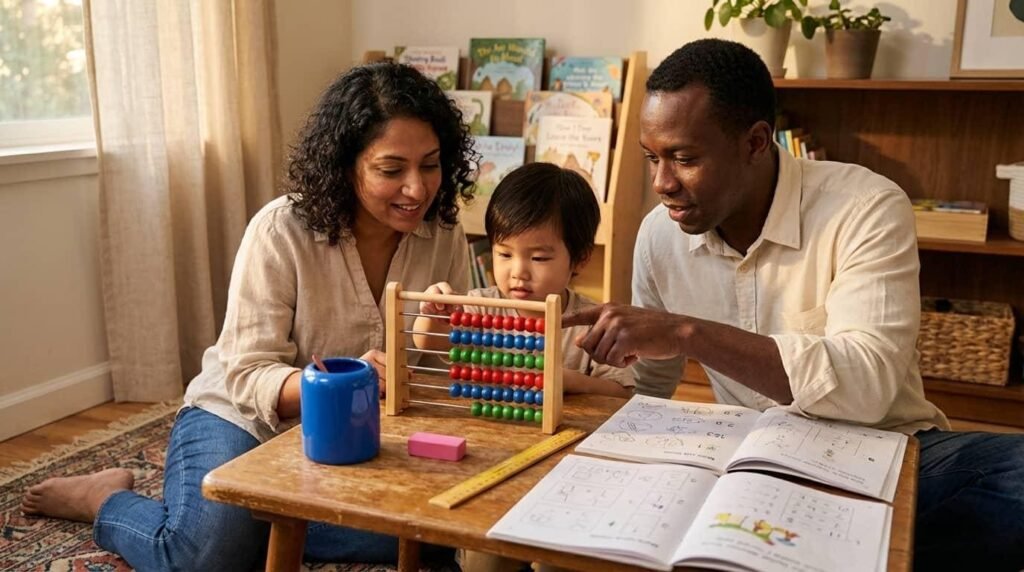
Advanced level: Practising mental calculations
At this stage, kids learn to calculate without touching the abacus frame.
They close their eyes or look ahead, picturing the beads moving in their mind to solve problems.
Progress varies by child. Focus on steady improvement rather than matching the speed of other students.
How to choose the best IPL-Abacus Koodalnagar Madurai class
Searching for local options online gets you a list of names, but picking the right spot takes a bit more research.
Here are 6 practical points to check before enrolling your child:
1. Check the course syllabus
Ask the center director for a complete syllabus for each level.
A clear course outline explains what skills are taught, how tests work, and when kids advance.
Ask these questions:
- What topics are covered in the beginner phase?
- What are the exact requirements to move to the next level?
- Does this specific center teach mental math visualisation?
- How do teachers track and grade weekly progress?
Direct answers make it easy to see if the course matches your child’s needs.
2. Understand the teacher’s experience
A great teacher makes complex tasks simple for young kids.
Ask about the instructor’s background, abacus certification, and experience with younger age groups.
Find out how they handle mistakes in class. A good instructor guides students through errors constructively so kids don’t feel discouraged.
3. Ask about class size and individual attention
Kids learn at different speeds, especially when picking up a brand-new skill.
Check how many students are in each batch and whether the teacher has time for one-on-one help.
Smaller groups usually mean more individual feedback, though good classroom management matters just as much.
Ask if you can attend a trial session before committing to a full term.
4. Compare fees and additional costs
Ask for a full breakdown of costs upfront to avoid unexpected bills later.
Common expenses include:
- Registration fees
- Monthly tuition charges
- Abacus frames and workbooks
- Exam or evaluation fees
- Certificates and extra practice sheets
These are typical industry costs, not verified IPL fees. Get the exact price list directly from the Koodalnagar center.
5. Consider class timings and travel
The schedule needs to work with your family’s daily routine.
Factor in school hours, homework time, play, and transit. Stacking too many activities into one day burns kids out fast.
Double-check the Koodalnagar address and class slots before signing up using mapping resources like Google Maps.
6. Look for meaningful progress tracking
Ask how the center keeps parents updated on student growth.
Look for these progress markers:
- Clear understanding of bead values
- Higher accuracy on daily worksheets
- Ability to explain how they solved a problem
- Steady improvement over time
- Confidence with new math concepts
Speed is nice, but accuracy and conceptual understanding matter much more.
Tips to help your child succeed in abacus learning
Enrolling in a class is just the first step. Home support and consistency build real skills over time.
Create a simple practice routine
Set a regular daily practice time when your child is well-rested.
A quick session after an after-school snack works much better than practicing late at night when kids are tired.
Stick to the methods taught by the instructor so you don’t confuse your child with conflicting techniques.
Focus on accuracy before speed
It is easy to focus on how fast a child can calculate, but rushing causes sloppy errors.
Encourage your child to get the steps right first. Speed comes naturally with practice.
Make learning enjoyable
Praise effort instead of comparing your child to others.
Simple comments like “You handled that sum really well today” or “Let’s check this one together” keep things positive.
Recognizing small improvements keeps kids motivated through tough topics.
Communicate with the instructor
If your child hits a wall with a specific topic, ask the teacher for target practice sheets to use at home.
Staying aligned with the teacher keeps home practice effective.
Keep school mathematics in the routine
Abacus practice supports school math, but it doesn’t replace standard schoolwork.
Kids still need to practice word problems, geometry, measurements, and written equations. Guidelines from educational authorities like the NCERT emphasize balancing mental arithmetic techniques with foundational conceptual problem-solving skills.
Combining abacus work with standard math homework builds well-rounded skills.
Frequently Asked Questions About IPL – Abacus Koodalnagar Madurai
1. What is IPL – Abacus Koodalnagar Madurai?
It refers to the abacus learning program run by IPL in the Koodalnagar area of Madurai. Reach out to the local center directly to confirm their current address, seat availability, and course schedules.
2. What are the benefits of abacus classes for children?
Abacus classes offer structured math practice that helps build calculation speed, focus, number familiarity, and self-confidence. Results depend on regular attendance, home practice, and teaching quality.
3. At what age can a child start learning abacus?
Most children start between ages 4 and 6, depending on whether they can recognize basic digits and follow simple instructions. Ask the center if they offer an entry-level assessment for young kids.
4. How much do abacus classes cost in Koodalnagar, Madurai?
Pricing varies based on course level, batch sizes, and study materials. Contact IPL directly for exact details on admission charges, monthly tuition, and material costs.
5. How can parents choose the best IPL-Abacus Koodalnagar Madurai programme?
Look at the syllabus, teacher experience, batch sizes, total fees, and location convenience. Request a trial class to see how your child responds to the environment before paying fees.
Conclusion
Abacus training offers kids a proven, practical way to master arithmetic and build mental math skills. With steady instruction and regular practice, children build strong number confidence that lasts.
If you are looking at IPL – Abacus Koodalnagar Madurai, contact the center directly to check their current schedules, fees, and syllabus details. Pick a batch that fits your family’s routine without stressing your child’s schedule.
Reach out to the local center today to ask about open trial classes and beginner batches.
Internal Linking Opportunities