Finding a reliable Mobile Service Course Centre Near Me can start your career in smartphone repair. But picking a training centre requires looking past the closest option.
A solid mobile service course teaches you how smartphones actually work. You learn to identify faults, use professional tools, and fix hardware and software problems safely. For advanced skills, you will need a Chip Level Mobile Service Course Near Me that provides hands-on motherboard repair training.
This guide covers what a mobile servicing course includes. You will learn how to compare training centres and which practical skills matter most. You will also see what mistakes to avoid and what career opportunities open up after completing the course.
What Is a Mobile Service Course?
A mobile service course is a practical technical training program. It teaches you to diagnose, repair, maintain, and troubleshoot smartphones.
Depending on the course level, you learn basic mobile repair, hardware servicing, and software troubleshooting. Advanced modules cover component testing, soldering, and motherboard diagnosis.
Basically, a best mobile service course Center Near Me teaches you how to find a problem in a smartphone and fix it with the correct tools.
A beginner-level course focuses on common faults. An advanced chip-level course covers complex motherboard problems and component-level diagnosis.
Why Search for a Mobile Service Course Centre Near Me?
Searching for a Mobile Service Course Centre Near Me makes sense because mobile repair is a physical skill. Smartphone servicing requires repeated hands-on practice at a real workbench.
A nearby training centre makes it easier to:
- Attend practical classes regularly
- Practise with repair tools and equipment
- Ask trainers questions directly
- Work on different types of smartphone faults
- Reduce daily travel time and expenses
- Access additional practice sessions
Look beyond location. A training institute slightly farther away might offer better practical training, experienced instructors, and a stronger syllabus.
Quick Answer: What Should I Look for in a Mobile Service Course Centre?
Choose a centre offering heavy practical training, an updated syllabus, and experienced trainers. You want proper repair tools, fault-diagnosis practice, transparent fees, and clear details about certification.
What Should a Good Mobile Service Course Teach?
Ask for the complete syllabus before joining any institute. A professional course covers more than simple part swapping.
1. Smartphone Basics and Components
Beginners need to understand the basic construction of a smartphone. This builds your foundation for advanced repair work.
Training includes:
- Smartphone parts and their functions
- Mobile phone architecture
- PCB basics
- Connectors and flex cables
- Battery and charging systems
- Display and touch components
- Camera, speaker, microphone, and sensors
This knowledge helps you pinpoint faults. You learn to diagnose the actual problem before replacing any parts.
2. Mobile Hardware Repair
Hardware repair is a massive part of mobile servicing.
You need practical exposure to common problems like:
- Mobile not switching on
- Charging problems
- Battery-related faults
- Display issues
- Touchscreen problems
- Speaker and microphone faults
- Camera problems
- SIM detection issues
- Network-related hardware faults
- Damaged charging connectors
A strong training program explains both the fault identification and the exact repair procedure.
3. Mobile Software Troubleshooting
Damaged hardware does not cause every smartphone problem. Software, settings, updates, and operating-system errors cause plenty of issues.
You learn legitimate servicing procedures like:
- Software troubleshooting
- System update procedures
- Backup and restore basics
- Factory reset procedures
- Driver installation
- Approved firmware servicing workflows
A responsible training centre also teaches you to respect customer privacy and follow basic data protection guidelines.
4. Repair Tools and Equipment
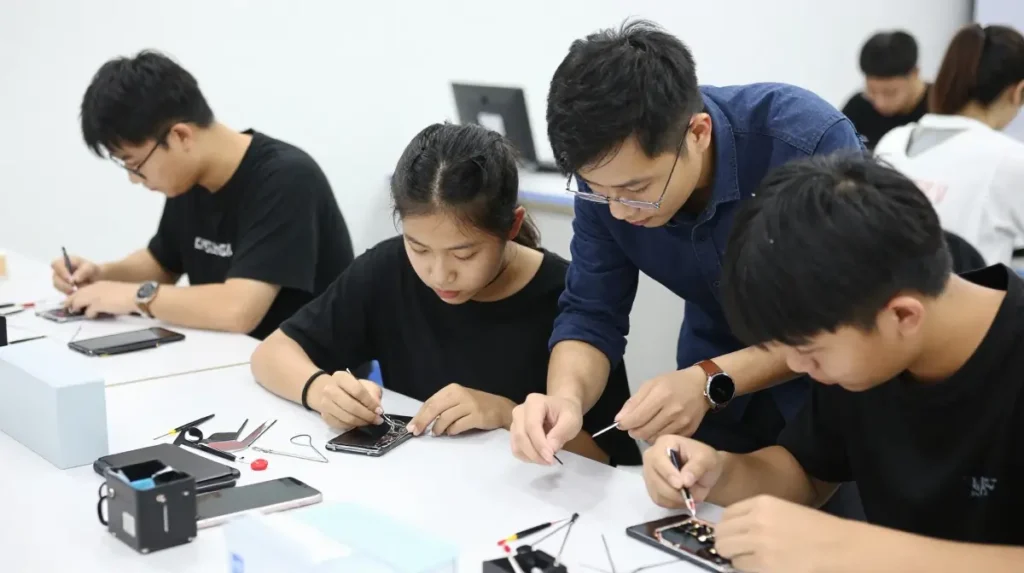
A good course forces you to use tools safely. Watching a trainer is never enough.
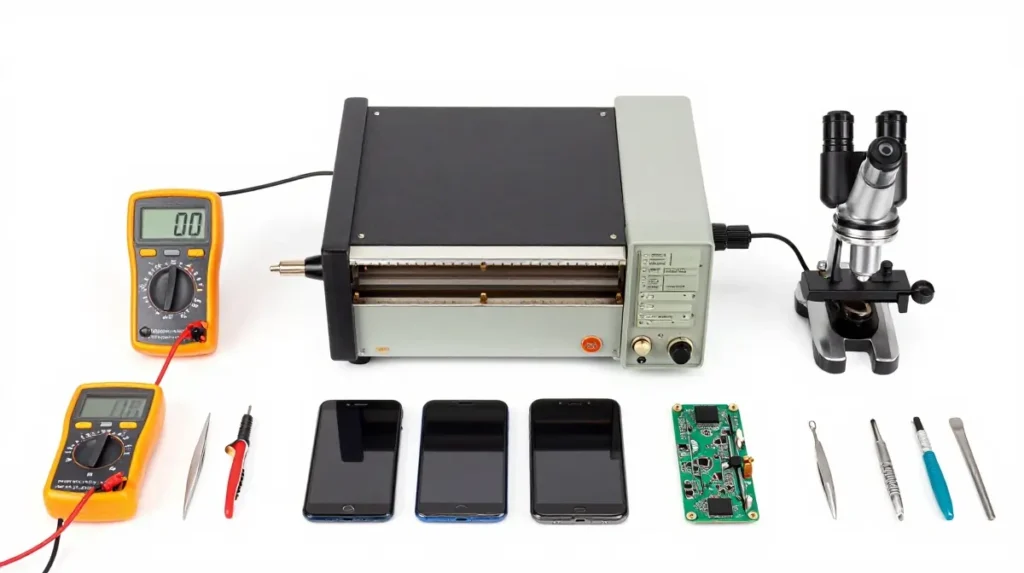
Common mobile repair tools for beginners include:
- Digital multimeter
- Soldering station
- Hot-air rework station
- DC power supply
- Microscope or magnification equipment
- Precision screwdriver set
- Tweezers
- PCB holder
- Flux and soldering materials
- ESD-safe equipment
You have to know how to handle these tools. Incorrect temperatures, excessive force, or poor soldering will fry delicate components.
Chip Level Mobile Service Course Near Me: Is Advanced Training Worth It?
If you understand basic smartphone repair or want deeper technical knowledge, search for a Chip Level Mobile Service Course Near Me.
Chip-level training focuses on diagnosing and repairing faults directly on the printed circuit board (PCB).
Training covers:
- PCB analysis
- Electronic component identification
- Circuit basics
- Voltage and continuity testing
- Short-circuit diagnosis
- Schematic reading basics
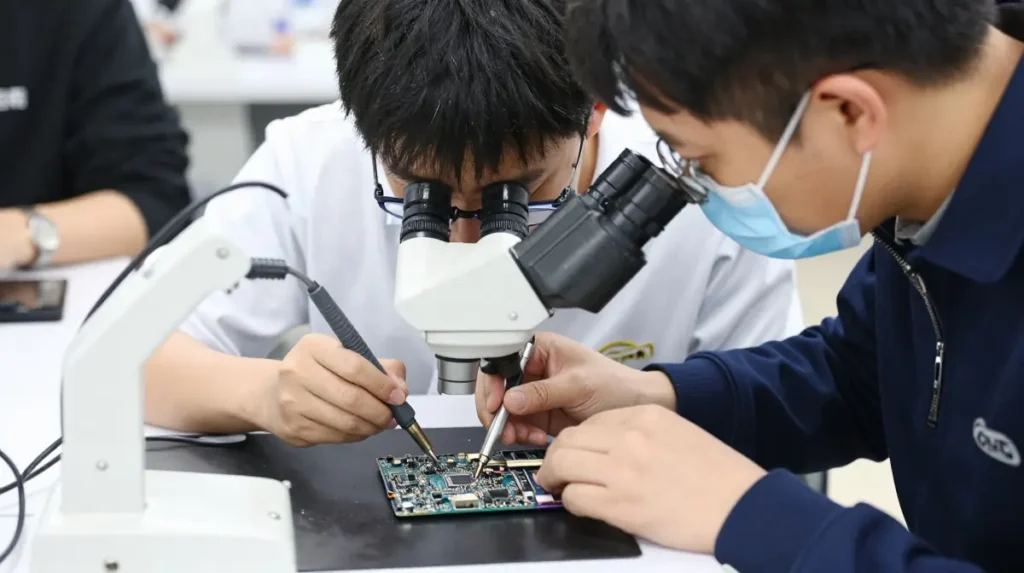
- Microsoldering
- Jumper techniques
- Connector and component replacement
- Power-related fault diagnosis
Basic Mobile Repair vs Chip-Level Mobile Repair
| Training Area | Basic Mobile Service Course | Chip-Level Mobile Service Course |
| Smartphone parts | Yes | Yes |
| Basic hardware repair | Yes | Yes |
| Software troubleshooting | Usually | Usually |
| Multimeter usage | Basic | Advanced application |
| PCB diagnosis | Limited | Detailed |
| Microsoldering | Limited or introductory | Core practical skill |
| Circuit-level troubleshooting | Limited | Advanced |
| Best suited for | Beginners | Advanced learners and technicians |
Who Should Consider Chip-Level Training?
Chip-level training fits:
- Beginners wanting comprehensive training
- Existing mobile repair technicians
- People planning to open a repair business
- Students interested in electronics-based troubleshooting
Ask how much time is dedicated to practical motherboard work before joining. Doing supervised repairs yourself builds real skill.
How to Choose the Best Mobile Service Course Centre Near Me
Compare institutes using a clear checklist. Do not rely on ads or just look at course fees.
Check the Practical Training Ratio
Ask a simple question. How much of the course is hands-on practical training?
Mobile servicing is a skill-based job. You need time to handle tools, inspect devices, test components, and run diagnostic procedures.
Look for a course that combines theory, trainer demonstration, supervised practice, and review.
Review the Course Syllabus
Get a written syllabus before paying anything. Make sure it includes basic electronics, hardware troubleshooting, tool handling, and soldering practice. An institute should tell you exactly what is included and what is skipped.
Ask About Trainer Experience
An experienced technician explains real repair situations you cannot learn from a textbook.
Ask who conducts the practical sessions. Check if students can ask questions during practice. Good teaching requires explaining the diagnostic process behind the repair.
Inspect the Training Lab
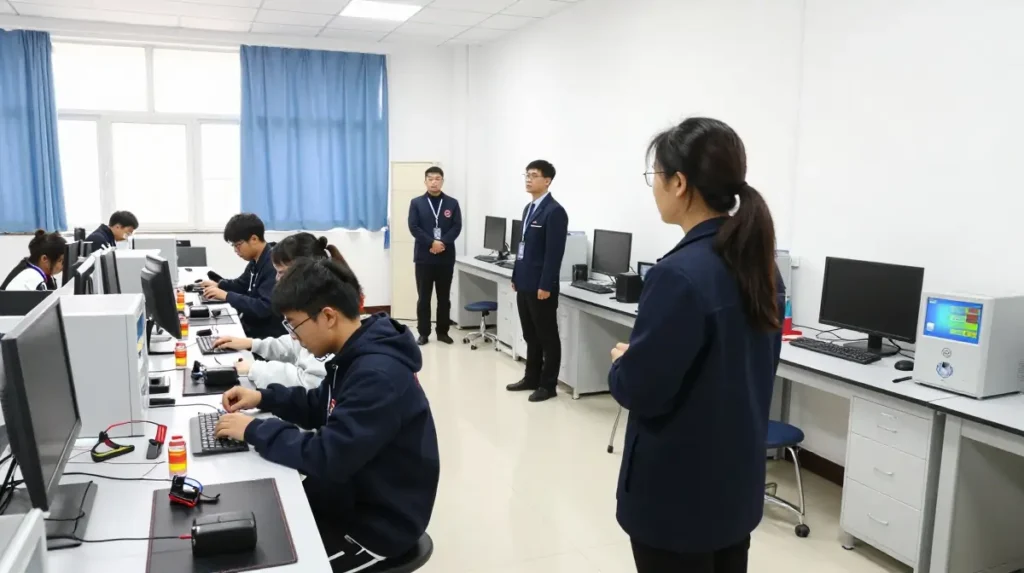
Visit the centre before enrolling if you can. See if students have access to relevant tools and a decent workspace. A practical training lab needs soldering equipment, multimeters, power supplies, microscopes, and practice boards.
Understand the Batch Size
Huge batches cut down your practice time. Ask how many workstations are available. Find out if you will practise individually or just watch group demonstrations.
Compare Course Duration and Fees Carefully
Do not pick a course just because it is the cheapest option.
Ask for a written fee breakdown. Confirm if there are extra charges later. Compare the syllabus and practical training hours before comparing prices.
Questions to Ask Before Joining a Mobile Service Training Centre
A quick chat with the institute reveals a lot about the course quality. Ask these questions:
- Can I see the complete syllabus?
- How much practical training will I receive?
- Does the course include chip-level repair?
- Will I personally use the repair equipment?
- What is the batch size?
- Are tools provided during training?
- What type of certificate is provided?
Ignore claims like “100% job guaranteed.” Building real skills takes quality training, heavy practice, and time on the job.
Common Mistakes Students Make When Choosing a Course
Choosing Only the Nearest Centre
Convenience matters. Training quality matters more. Compare a few solid institutes before deciding.
Choosing Based Only on Low Fees
A cheap course is fine if the training is good. Price alone does not tell you the quality. Compare the lab facilities and student practice opportunities first.
Not Checking Whether “Chip Level” Is Truly Practical
Some courses advertise chip-level training but deliver mostly theory. Make sure you actually practise PCB testing, diagnosis, and soldering under direct supervision.
Expecting to Become an Expert Immediately
Finishing a course is just step one. Real confidence develops through repeated practice, careful diagnosis, and working with different device models. You also have to keep up with right to repair news and changing smartphone technology.
Ignoring Safety and Customer Privacy
A professional tech handles expensive devices and sensitive customer data. Build habits like protecting customer privacy, getting clear repair authorization, and following ESD precautions.
Career Options After Completing a Mobile Service Course
A mobile service course opens up several paths depending on your goals.
Work as a Mobile Repair Technician
Read a mobile technician career guide to see your options. You can apply for roles at independent repair shops, multi-brand service businesses, or retail stores. Practical ability usually lands the job.
Start a Mobile Repair Business
After building technical skills, many technicians choose self-employment. Starting a mobile repair business requires suitable tools, a clean workspace, and reliable spare-parts sourcing. Start small and do reliable work before investing heavily in inventory.
Offer Specialized Repair Services
With advanced training, you can specialize in microsoldering, board-level diagnosis, or complex hardware troubleshooting. Specialization means constant learning since smartphone hardware changes fast.
How to Get More Value from Your Mobile Service Course
Your practice habits determine your success.
Take Notes During Practical Sessions
Write down fault symptoms, testing steps, tools used, and the final result. Your own repair notes become a valuable reference manual later.
Learn Diagnosis Before Replacement
Beginners often replace parts without confirming the actual cause of the fault. Develop a systematic approach. Observe, inspect, test, diagnose, repair, and verify. This cuts out unnecessary repairs.
Practise Tool Control
Soldering, multimeter testing, and microsoldering require physical repetition. Focus on accuracy and safe handling. Speed comes later.
Keep Learning After the Course
Smartphones evolve constantly. You have to learn about new hardware designs, diagnostic methods, and manufacturer procedures. A good course gives you the foundation to keep learning.
Frequently Asked Questions
What is the best Mobile Service Course Centre Near Me? The best centre provides structured practical training, experienced instructors, suitable repair equipment, a clear syllabus, and reasonable batch sizes. Compare multiple institutes before paying any fees.
How long does a mobile service course take? Course duration varies by institute and syllabus. Basic courses run shorter. Comprehensive or chip-level programs demand more time. Compare actual training hours and practical content, not just the overall course length.
Can a beginner join a chip-level mobile service course? Yes. Some comprehensive chip-level courses accept beginners. They start with basic electronics and smartphone components. Check if the syllabus actually progresses from fundamentals to advanced practical work.
What is taught in a Chip Level Mobile Service Course Near Me? A chip-level course covers PCB analysis, electronic components, circuit testing, multimeter usage, power diagnosis, short-circuit detection, and microsoldering.
Can I start a mobile repair business after completing the course? A course provides the foundational skills. You will likely need more practice and experience before handling complex customer repairs on your own.
Conclusion
Searching for a Mobile Service Course Centre Near Me is a good start. The nearest institute is not automatically the best choice, though. Look closely at the syllabus, trainer experience, lab facilities, and hands-on practice time.
If you want advanced technical skills, compare options for a Chip Level Mobile Service Course Near Me. Confirm the program includes genuine supervised PCB practice.
Visit the training centre before enrolling if possible. Ask detailed questions and pick a program focused heavily on practical skill development. Solid training and consistent practice will build your foundation in professional mobile servicing.